memory care

The Comfort of Companionship in Memory Care

Why Sharing a Studio Can Change Everything

Moving a loved one into Memory Care often starts with a checklist. Safety. Medical support. Comfort. Structure. These things matter deeply. They create the foundation for good care. But there’s another factor, one that’s less clinical and more human, that often shapes daily life in ways families don’t always expect: connection. It’s not always the care plan that defines the experience. It’s who’s sitting beside you at breakfast. Who notices when you’re quieter than usual. Who shares the small, steady rhythms of the day. That’s where companion living can quietly, but profoundly, change everything.

Many families are surprised to learn that shared studios can be one of the most supportive options for individuals experiencing memory loss. Private apartments are available, of course, but companion living offers something less tangible and often more powerful: a familiar presence, a shared routine, and a subtle sense of reassurance woven into the day. For many residents, that’s the difference between simply being well cared for and truly living to the fullest.

The Top 10 Benefits of Companion Living

1. Loneliness Doesn’t Get the Last Word

Memory loss can make the world feel unpredictable, especially later in the day. Confusion can build. Anxiety can rise. This is often referred to as “sundowning.” But when someone else is present, the room changes. There’s a quiet reassurance that comes from shared space, a steady presence that helps soften uncertainty and reduce agitation.

2. Conversation Happens Without Effort

Not every moment needs to be facilitated. A comment over coffee. A shared smile. Sitting side by side in comfortable silence. These small, unplanned interactions help maintain communication, support cognitive engagement, and create a sense of ease without any pressure.

3. Routines Become More Natural

Structure matters, but it doesn’t always need to feel structured. When one person begins getting ready for breakfast, the other often follows. When one heads toward an activity, the other joins in. This kind of social rhythm creates gentle momentum. Less prompting. More participation.

4. The Power of Shared Meals

One of the most overlooked aspects of well-being is how, and with whom, we eat. During the height of the pandemic, this became especially clear. As Julie Ambachew, RN and VP of Clinical Operations at Aegis Living, explains: “We saw firsthand how isolation impacted residents. Without regular social dining, some individuals began losing weight. Their routines were disrupted. Meals became less consistent because they were no longer shared experiences. When people dine together, they encourage each other. They stay longer. They eat better. And those healthy routines come back naturally.” For individuals living with cognitive decline, this dynamic is even more important. Many take cues from the people around them. The presence of others during mealtime naturally supports engagement, helping guide when to begin, how long to stay, and encouraging consistent intake. The simple act of seeing another person eat can become a gentle prompt, helping restore appetite and reinforce routine without the need for instruction. Sitting across from someone, picking up a fork at the same time, lingering a little longer at the table. These moments create encouragement without effort.

5. Encouragement Feels Different Coming from a Peer

“Let’s go.” “Come with me.” These invitations carry a different weight when they come from someone sharing the same environment. It’s not direction, it’s companionship. And that distinction often makes participation feel easier and more natural. There’s a real comfort in doing things alongside someone else. A gentle nudge that feels familiar, not forced. For someone experiencing memory loss, that kind of encouragement can ease hesitation and make each next step feel more approachable. Over time, these small shared moments often lead to greater participation, more time spent engaged in the day, and a stronger sense of connection to the world around them.

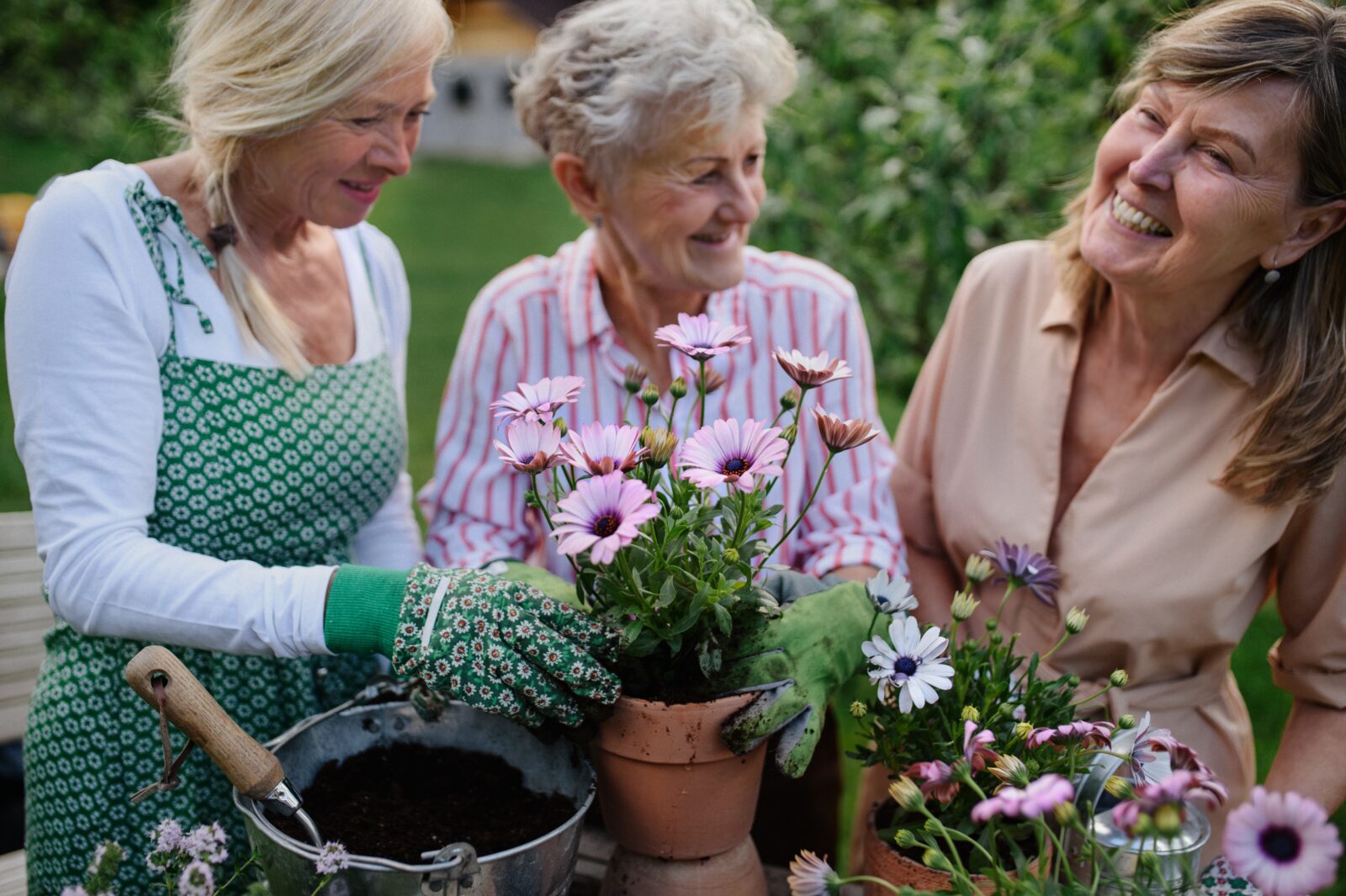
memory care companionship

6. Awareness Happens in Real Time

Sometimes the earliest signs of change are subtle. A pause. A shift in mood. A moment of confusion. When someone shares the space, those moments are more likely to be noticed right away, simply through being alongside one another throughout the day. This kind of awareness adds to the thoughtful care already in place, offering an extra layer of connection and attentiveness. A companion may naturally recognize when something feels off and help bring gentle awareness to it, supporting the care team in understanding what a resident may need in that moment. In Memory Care, it’s often the smallest changes that matter most. Having someone nearby can help ensure those moments are seen, shared, and supported.

7. More Natural Moments of Engagement

Shared living creates more opportunities for interaction throughout the day. More reasons to speak. More chances to connect. More moments that unfold naturally rather than on a schedule. These touchpoints help maintain engagement in ways that feel familiar and unforced. Instead of relying solely on planned activities, connection happens in the in-between moments: waking up, getting ready, returning from a meal. These everyday interactions build a quiet consistency, helping residents stay engaged in ways that feel intuitive rather than structured.

8. Thoughtful Pairing Makes the Difference

Companion living isn’t just about proximity. It’s about compatibility. Sleep habits. Communication style. Personality. Daily preferences. When residents are thoughtfully matched, the experience feels intuitive, like something remembered rather than something new.

9. It Often Feels Surprisingly Familiar

For many residents, sharing space isn’t unfamiliar at all. It’s a return. A lifetime of living alongside a spouse, a sibling, a family member. Having someone nearby again can feel grounding. Not like a change, but like coming back to something known.

10. It’s Always About Choice

Companion living is one option, not the only one. Some individuals prefer privacy. Others thrive with someone beside them. The right environment is the one that reflects the individual, not a standard model. Memory may change. The need for connection does not. When companionship is thoughtfully integrated into daily life, it brings warmth, stability, and a quiet sense of belonging that carries through every part of the day.

If you’re exploring Memory Care, take time to look beyond the checklist. Spend time in the environment. Watch how residents interact. Notice the rhythm of the day. Because sometimes, the smallest shift, like sharing a space, can make the biggest difference.

womens history month

Women’s History Month: March 2026

A Celebration of Courage, Leadership & Change

Every March, the United States, along with countries around the world, pauses to honor the extraordinary contributions of women throughout history. Women’s History Month is more than a calendar observance. It is a vital act of remembrance and recognition, a reminder that the story of human progress has always been shaped by women: their resilience, their vision, and their relentless pursuit of justice and equality.

From the suffragists who marched through cold city streets to the scientists who cracked open the mysteries of the universe, women have driven change in every field, every era, and every corner of the globe. And yet, for much of recorded history, their contributions went unacknowledged. Women’s History Month exists to correct that oversight, and to inspire future generations.

A Brief History of Women’s History Month

The roots of Women’s History Month stretch back to 1908, when 15,000 women marched through New York City demanding better pay, shorter working hours, and voting rights. The following year, the Socialist Party of America designated the first National Woman’s Day, observed on February 28, 1909.

Internationally, the movement gained momentum when Clara Zetkin proposed an International Women’s Day at the 1910 International Conference of Working Women in Copenhagen. The idea was adopted by 17 countries, and March 8 became the globally recognized date, a tradition that continues to this day.

In the United States, the modern Women’s History Month movement can be traced to 1978, when the Education Task Force of the Sonoma County Commission on the Status of Women in California organized a “Women’s History Week” to coincide with International Women’s Day. The initiative was designed to bring women’s achievements into school curricula and public consciousness.

The concept spread rapidly. By 1980, President Jimmy Carter issued a presidential proclamation declaring the week of March 8 as National Women’s History Week. Congress followed in 1987 by passing a resolution designating the entire month of March as Women’s History Month, a designation that has been reaffirmed each year since.

2026 Theme: Leading the Change — Women Shaping a Sustainable Future

Each year, the National Women’s History Alliance selects a theme that reflects the pressing concerns and enduring strengths of women across the country. The 2026 Women’s History Month theme is:

“Leading the Change: Women Shaping a Sustainable Future”

This theme speaks to a powerful and urgent truth: in a world facing overlapping crises – climate change, economic insecurity, healthcare disparities, and threats to democratic participation – women, particularly those from marginalized communities, often feel these impacts most acutely. And yet, it is frequently women who are leading the charge toward lasting, meaningful solutions.

The theme intentionally expands the concept of “sustainability” beyond its environmental meaning. It encompasses financial sustainability, community resilience, leadership succession, and intergenerational equity. Whether through developing green technologies, advancing economic justice, strengthening education systems, or building civic power, women are designing the blueprints for a transformed world.

How to Celebrate Women’s History Month

There are many ways to honor and engage with Women’s History Month this March. Consider exploring the biographies and works of women who have shaped history in your field or community. Attend local events, panels, or lectures celebrating women’s achievements. Support women-owned businesses and organizations doing important work.

In schools and workplaces, Women’s History Month is an excellent opportunity to expand curricula and programming to include more diverse voices. Hosting discussions, film screenings, book clubs, or guest speaker events centered on women’s contributions can foster deeper understanding and connection across generations.

Most importantly, take time to reflect on the women in your own life, and to amplify their voices and stories, both now and throughout the year.

Looking Forward

Women’s History Month reminds us that history is not simply something that happened in the past, it is being made right now, by women in every community who are working to build a more just, equitable, and sustainable world. The 2026 theme calls on all of us to recognize that leadership, and to stand alongside it.

As we mark another Women’s History Month, let us commit not only to remembering the past but to shaping the future together.

Learn more about the 2026 Women’s History Month theme: 

nationalwomenshistoryalliance.org/womens-history-theme-2026