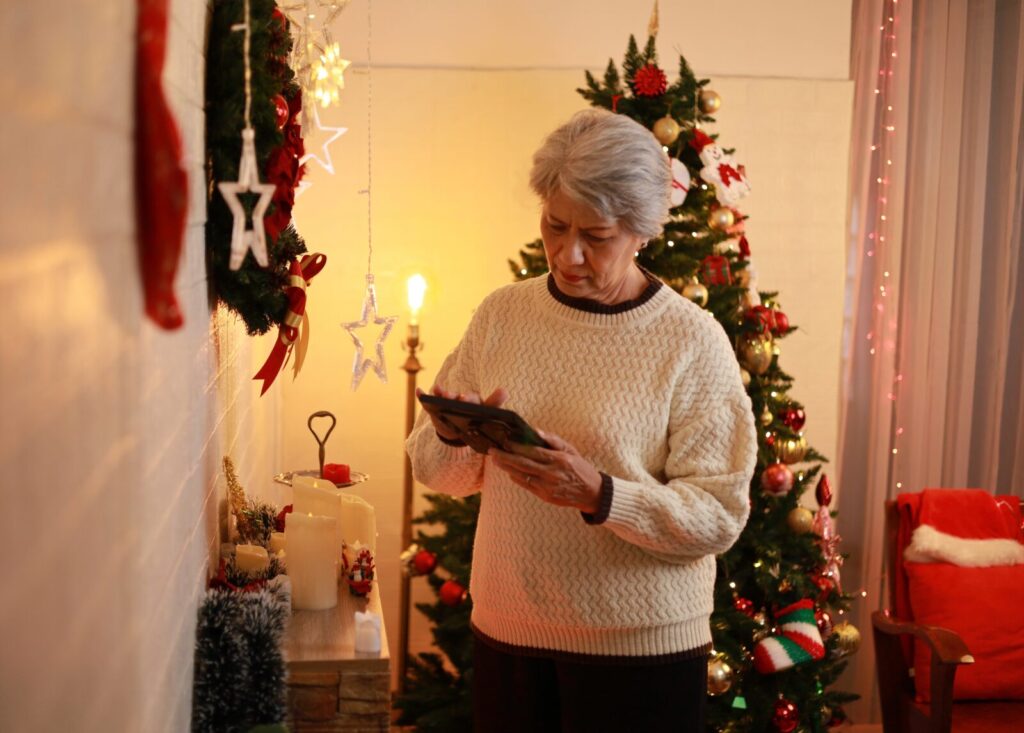
Picture a kitchen in late December. The decorations are up because the grandkids expect them. The radio plays the same carols it always has. And at the table sits one chair that has stayed empty since last spring.
The holidays get sold to all of us as the most connected time of the year. For many older adults, they arrive with shorter days, quieter houses, and memories of people who are no longer at the table. Both things are true at once, and naming that plainly is the first step toward helping.
We hear from families every season who noticed something during a holiday visit. Mom seemed flatter than usual. Dad skipped the church dinner he never skips. This article is for you if you are worried about someone you love, and for you if the someone you are worried about is yourself.
Holiday Blues, Seasonal Affective Disorder, or Depression
These three things get lumped together, and they are different. Knowing the difference helps you respond well.
Holiday blues are temporary. Sadness, stress, or irritability tied to the season itself. They tend to lift when the calendar turns and routines return.
Seasonal affective disorder, often shortened to SAD, is a recurring form of depression linked to shorter daylight hours in fall and winter. It follows a pattern, arriving around the same time each year. Older adults who spend more of the winter indoors, often because of ice, fall risk, or limited mobility, are especially vulnerable to it.
Clinical depression is persistent. It affects sleep, appetite, energy, and the ability to enjoy daily life, and it does not resolve on its own when the tree comes down.
One fact matters more than any other here. Depression is treatable, and it is a medical condition rather than a normal part of getting older. Yet nearly 55% of older adults with depression receive no mental health treatment at all. A conversation with a doctor is a reasonable, ordinary step, the same as it would be for chest pain or a bad knee.
Why the Holidays Can Be Harder for Those 50 and Better
The season carries weight that younger family members sometimes forget to account for.
Grief sits down at the table. The first holiday after losing a spouse, a sibling, or a lifelong friend can feel unbearable. Traditions built around a person become reminders of that person.
Practical barriers pile up too. Winter weather keeps people home. Driving at night gets harder. A fixed income makes gift giving stressful. Adult children live three states away. A recent move into assisted living or a change in care can make the season feel unfamiliar in a home that is not yet home.
Then there is the pressure to be cheerful. Many older adults feel they should perform happiness for the family’s sake, which turns an already hard season into an exhausting one.
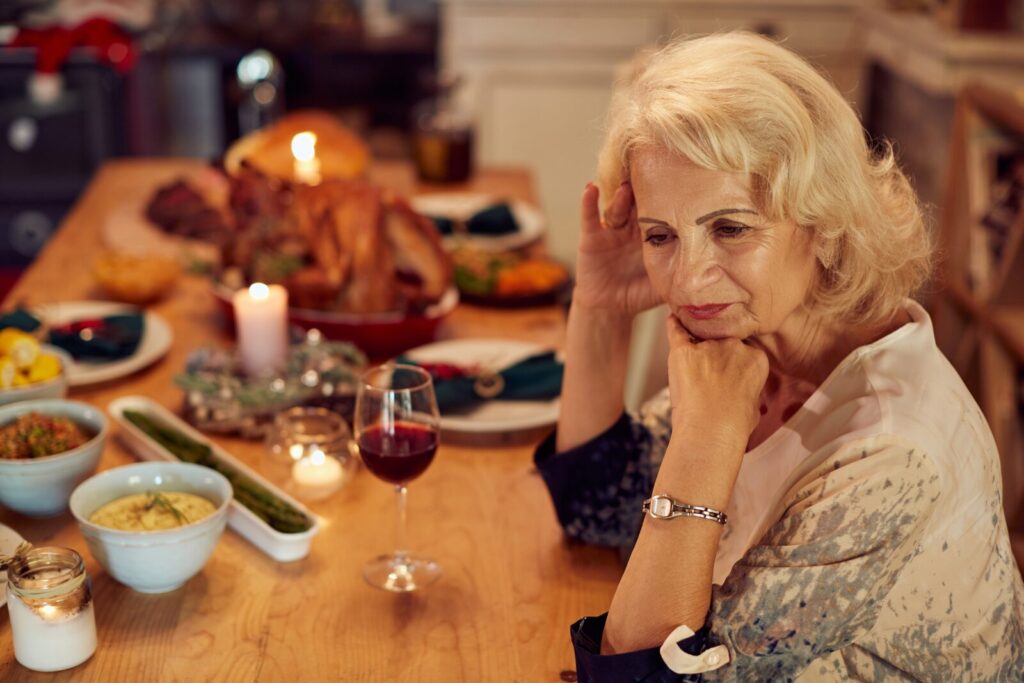
Holiday Anxiety Is Real Too
Depression gets most of the attention, and anxiety deserves its share. The holidays ask a lot of a person: travel, crowds, noise, disrupted routines, and unfamiliar food on an unfamiliar schedule.
Hearing loss turns a loud family dinner into hours of strain. Researchers at Cedars-Sinai note that hearing loss, memory impairment, and other functional changes can make large gatherings stressful and can deepen feelings of loneliness and anxiety. Memory changes make a busy, crowded room disorienting. Many older adults also carry a quiet worry about being a burden, about needing a ride, a quieter seat, or an earlier bedtime.
If someone you love declines an invitation, consider that the gathering itself may feel overwhelming rather than unwanted. A smaller visit often works better than a bigger party.
Loneliness and Being Alone Are Different Things
A person can sit at a full holiday table and feel invisible. A person can live alone, see a neighbor each morning, call a daughter each Sunday, and feel genuinely connected. Researchers writing in JAMA describe social isolation as the measurable absence of relationships, while loneliness is the subjective feeling of being alone. Both matter, and they do not always travel together.
The numbers deserve attention. One in three adults aged 65 to 80 reports feeling lonely some of the time or often. Chronic loneliness and isolation carry serious health risks, including a roughly 50% higher risk of developing dementia according to the U.S. Surgeon General’s advisory on social connection, along with elevated risks for heart disease and depression.
Isolation is a health concern, on the same shelf as blood pressure and cholesterol. Treat it with the same seriousness.
Warning Signs to Watch For
Holiday visits are often when families first notice changes, because you finally see the house, the fridge, and the mail with your own eyes. Watch for:
- Withdrawing from activities they used to enjoy
- Changes in sleep, sleeping far more or far less
- Noticeable weight loss or a nearly empty refrigerator
- Neglecting personal care, laundry, or the home
- Unopened mail or unpaid bills stacking up
- Missed medications or confusion about them
- Increased alcohol use
- New irritability or flatness
- Talking about being a burden
- Unusual fatigue
- Statements of hopelessness, such as “What’s the point”
One sign alone may mean nothing. Several together mean it is time to pay closer attention, and statements of hopelessness always deserve a response.

What Families Can Do Right Now
You do not need a grand gesture. You need consistency. These steps are small on purpose.
- Call more often, and put it on the calendar. A scheduled Tuesday call gives someone something to look forward to. Random calls get missed.
- Ask open questions and actually listen. “How have the evenings been feeling lately” opens more doors than “You’re doing okay, right.”
- Include them in planning. Ask what they want the holiday to look like. Planning around a person tells them they are a logistics problem. Planning with them tells them they matter.
- Keep traditions small and manageable. One quiet dinner can carry more meaning than a chaotic open house.
- Make room for grief. Set the empty chair. Tell the story about Dad and the burned turkey. Naming the loss out loud relieves the pressure to pretend.
- Help with transportation. A ride solves half the barriers on this list.
- Encourage daylight. A short walk before 2pm, or even a chair by a bright window, helps with seasonal mood changes.
- If you live far away, build a local safety net. Ask a neighbor or family friend to check in weekly. Set up a standing video call and treat it like an appointment.
- If signs persist past the season, involve their doctor. Offer to help make the appointment or join the call.
When It Might Be Time for More Support
Sometimes a weekly phone call is enough. Sometimes it is clear that the days themselves need more structure and more people in them. Options worth knowing about include:
- Home care companionship, a caregiver who visits for conversation, meals, and errands
- Adult day programs, structured daytime activity and social time
- Senior centers, free or low-cost classes, meals, and community
- Counseling, including therapists who specialize in grief and later life
- Senior living communities, where shared meals and daily activity build connection into ordinary life
These are options to explore at your own pace. A holiday visit where you notice changes is an opening for a calm conversation in January, with time to visit places together and ask questions. Families who start the conversation early get to make decisions thoughtfully instead of from a hospital hallway.
Where to Start Looking
If you decide to explore care options, we built CareAvailability.com for exactly this moment. It is a free, national, real-time directory of senior living and care providers. You search, you compare, and you contact providers directly. No referral fees. No data sold. No call center standing between you and the community you want to reach. Comprehensive, free, and private.
If You or Someone You Love Needs Help Now
- Crisis support: Call or text 988, the Suicide and Crisis Lifeline, any hour, any day
- Eldercare Locator: 1-800-677-1116, to find local aging services anywhere in the country
- Institute on Aging Friendship Line: 1-800-971-0016, a warm line for older adults who feel lonely or isolated
- Emergency: 911
One Call Can Matter More Than Any Gift
The hardest part of this season, for many families, is simply not knowing whether what they are seeing is sadness that will pass or something that needs attention. You know your person best. Trust what you notice, ask the gentle question, and follow up after the decorations come down.
We say this often because we believe it: the right resource at the right time changes everything. This season, the right resource might be a doctor’s appointment, a senior center brochure, a Friendship Line number taped to the fridge, or a Tuesday phone call that never gets skipped. Pick one and start there.
