You’re raising kids and caring for a parent.
You’re not alone, and you don’t have to figure this out by yourself.
It’s 11pm. You just got the kids to bed after helping with homework, making dinner, and breaking up the fourth argument of the evening. Your phone buzzes. It’s your mom’s assisted living facility. Again.
You’re not imagining how hard this is.
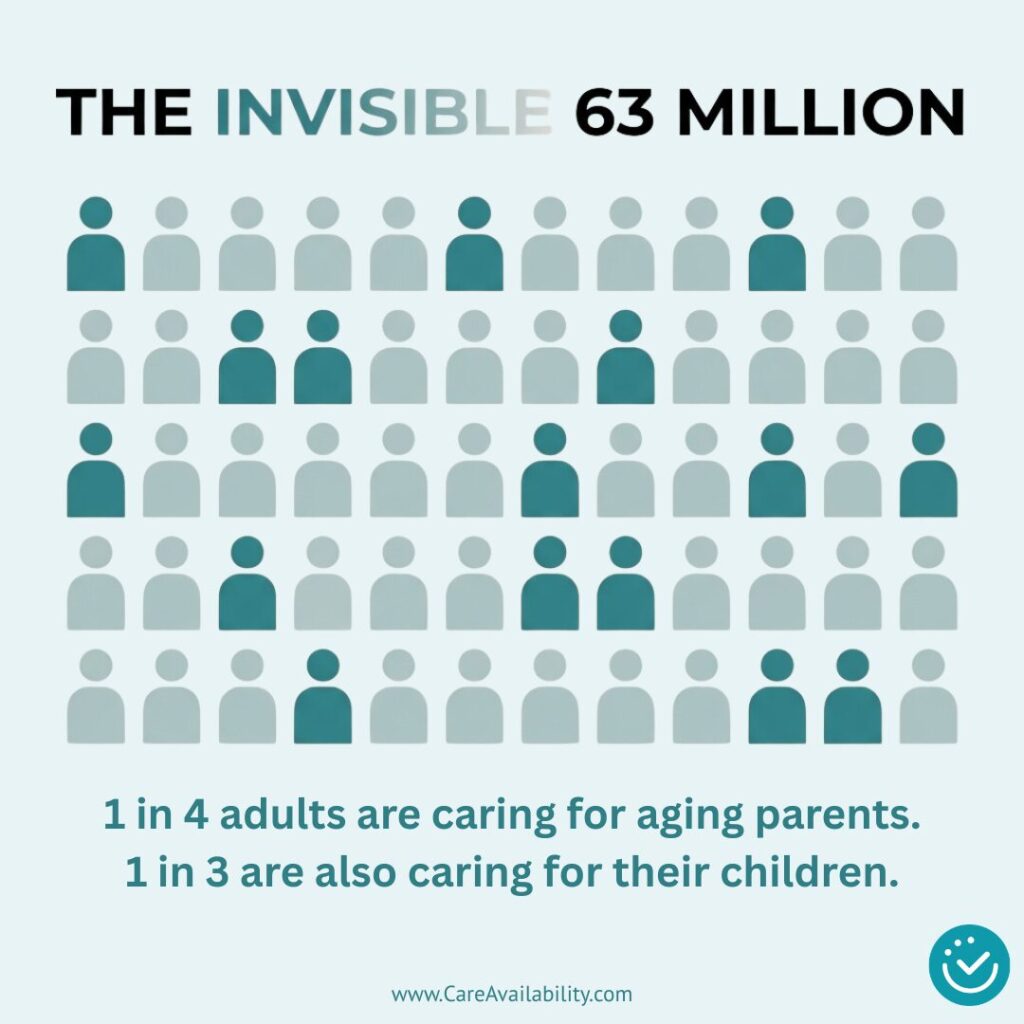
You’re part of what’s now called the sandwich generation. You’re raising children while also managing care for an aging parent. And according to recent data from AARP and the National Alliance for Caregiving [1], you’re far from alone.
The Numbers Tell a Story You’re Living
63 million Americans are now family caregivers. That’s nearly one in four adults. The number has jumped by 20 million since 2015.
Nearly one in three caregivers are also raising children under 18. That figure rises to 47% among caregivers under 50.
One in four caregivers provide 40 or more hours of care per week. One in three have been caregiving for five years or longer.
From my perspective, these aren’t just statistics. They’re the reality of people I talk to every single day. Case managers who see families in crisis. Adult children calling from hospital waiting rooms. Marketing directors at senior living communities who hear the exhaustion in a family member’s voice.
The feeling that you’re constantly pressed for time isn’t in your head. 31% of sandwich generation caregivers report feeling that way, according to Caregiver Action Network [2] research.
The Emotional and Financial Weight Is Real
One in five caregivers report being in fair or poor health themselves. One in four feel socially isolated.
The financial impact is just as crushing.
69% of sandwich generation respondents [3] said they feel financial pressure from caring for parents. That’s up from 64% just two years earlier.
58% of those financially supporting aging parents have gone into debt. 74% say caregiving prevents them from reaching their financial goals. And yet 84% still say it’s their responsibility.
Caregivers lose an average of $21,000 in income annually due to reduced hours or time away from work. Many spend around $10,000 per year on caregiving expenses.
More than half of sandwich caregivers said they have had to choose between their career and caring for their parents. That’s more than double the 26% reported among adults overall.
Nancy LeaMond, AARP’s Executive Vice President, put it plainly: “Caregivers are the invisible backbone of our broken long-term care system and economy, and too many are paying the price out of their own pockets, risking their own financial security.”
You’re not failing. The system is failing you.
How to Start Mapping Your Parent’s Care Needs
Based on my years of experience in this industry, here’s my point of view on this: most families wait until a crisis forces a decision. A fall. A hospitalization. A moment when there’s no time left to plan.
You can start earlier. Not because it’s easy, but because having even a rough map makes the crisis moment less terrifying.
Start with a conversation. Only 39% of people said they discussed their parents’ financial needs in the past year. But 84% said that conversation would help their family focus on what matters most.
Ask your parent what they want. Where do they want to live if staying home becomes unsafe? What matters most to them? What are they most afraid of?
Write it down. Share it with your siblings or other family members involved in care decisions.
Assess what help is needed now, and what might be needed soon. Can your parent manage medications safely? Are they eating well? Can they get to appointments? Are they isolated?
You don’t need to solve everything today. You need to know what you’re working with.
Identify what resources already exist. Does your parent have long-term care insurance? Veterans benefits? A trusted neighbor who checks in? A case manager through their health plan?
Many families don’t realize help is already available until they’re in crisis mode and someone at the hospital mentions it.
Understanding the Types of Senior Care
The world of senior care is confusing because there are multiple levels of support, and the names don’t always make the differences clear.
Here’s a plain-language breakdown:
Home care means a caregiver comes to your parent’s home to help with daily tasks like bathing, dressing, meal preparation, medication reminders, or companionship. Your parent stays in their own home. Care can range from a few hours a week to 24/7 live-in support.
Independent living is a senior apartment community, usually age 55 or older. Your parent has their own apartment. Meals, activities, and transportation are often included. There’s no medical care or personal care provided. It’s for people who are still independent but want a community and fewer home maintenance responsibilities.
Assisted living provides housing, meals, and help with daily activities like bathing, dressing, and medication management. Staff are available 24/7. It’s for people who need regular help but don’t need the medical care of a nursing home.
Memory care is a specialized form of assisted living designed for people with Alzheimer’s disease or other forms of dementia. The environment is secure. Staff are trained in dementia care. Activities and routines are structured to reduce confusion and anxiety.
Skilled nursing provides 24-hour medical care from licensed nurses. It’s for people who need ongoing medical attention, wound care, physical therapy, or help with most daily activities. Sometimes called a nursing home.
Hospice care focuses on comfort rather than cure for those with a terminal illness and a life expectancy of six months or less. It can be provided at home, in a hospice facility, or in a nursing home. The goal is quality of life and symptom management.
Most people move through this continuum over time. Your parent might start with home care, transition to assisted living, and eventually need memory care or skilled nursing. Understanding the options now helps you recognize when it’s time to consider the next level of support.
One Step Forward
You don’t have to have it all figured out tonight.
Start with one conversation. One search. One question answered.
The right resource at the right time changes everything. You’re doing harder work than most people will ever understand. And you’re not doing it alone, even when it feels that way.
Be gentle with yourself. Change takes time. Plan ahead when you can, ask questions, and lean on the people and resources around you.
Visit CareAvailability.com [4] when you’re ready to start looking. Search as many times as you need. No pressure. No sales calls. Just information, when you need it.
Resources & Citations
[1] AARP and the National Alliance for Caregiving — New Data Expose Financial Strain of Family Caregiving (October 2025): https://press.aarp.org/2025-10-28-New-Data-Expose-Financial-Strain-of-Family-Caregiving
[2] Caregiver Action Network — The Sandwich Generation: https://www.caregiveraction.org/sandwich-generation/
[3] HousingWire — Sandwich Generation Financial Strain: https://www.housingwire.com/articles/sandwich-generation-financial-strain/
[4] CareAvailability.com — Free, national, no-referral-fee senior care directory: https://www.careavailability.com