Keeping Those 50 and Better Safe This Summer
Summer brings longer days, outdoor activities, and time with family. It also brings heat that can turn dangerous fast for older adults.
We know you are looking for clear, practical information you can use right now. Whether you are caring for a parent, planning ahead for yourself, or working with families as a professional, this guide gives you what you need to keep those 50 and better safe when temperatures rise.
Why Older Adults Face Higher Heat Risk
The body’s ability to regulate temperature changes as we age. Older adults sweat less, adjust to temperature changes more slowly, and may not feel thirsty even when dehydration has already started.
Chronic health conditions make the risk worse. Heart disease, diabetes, kidney problems, and lung conditions all reduce the body’s ability to handle heat stress. Many common medications, including diuretics, blood pressure drugs, and antihistamines, interfere with temperature regulation and increase dehydration risk.
Some older adults live alone and may not recognize warning signs until a heat-related illness has progressed. Others rely on caregivers who may not know what to watch for.
That is where clear information makes a difference.
Recognize the Warning Signs Early
Heat exhaustion and heat stroke can develop quickly. You need to know what to look for.
Heat Exhaustion Symptoms
Watch for these signs:
- Heavy sweating or cold, clammy skin
- Weakness, dizziness, or confusion
- Nausea or vomiting
- Headache
- Muscle cramps
- Fast, weak pulse
What to do: Move the person to a cooler location immediately. Remove excess clothing. Apply cool, wet cloths to the skin. Offer small sips of water. If symptoms worsen or last longer than an hour, call for medical help.
Heat Stroke Symptoms
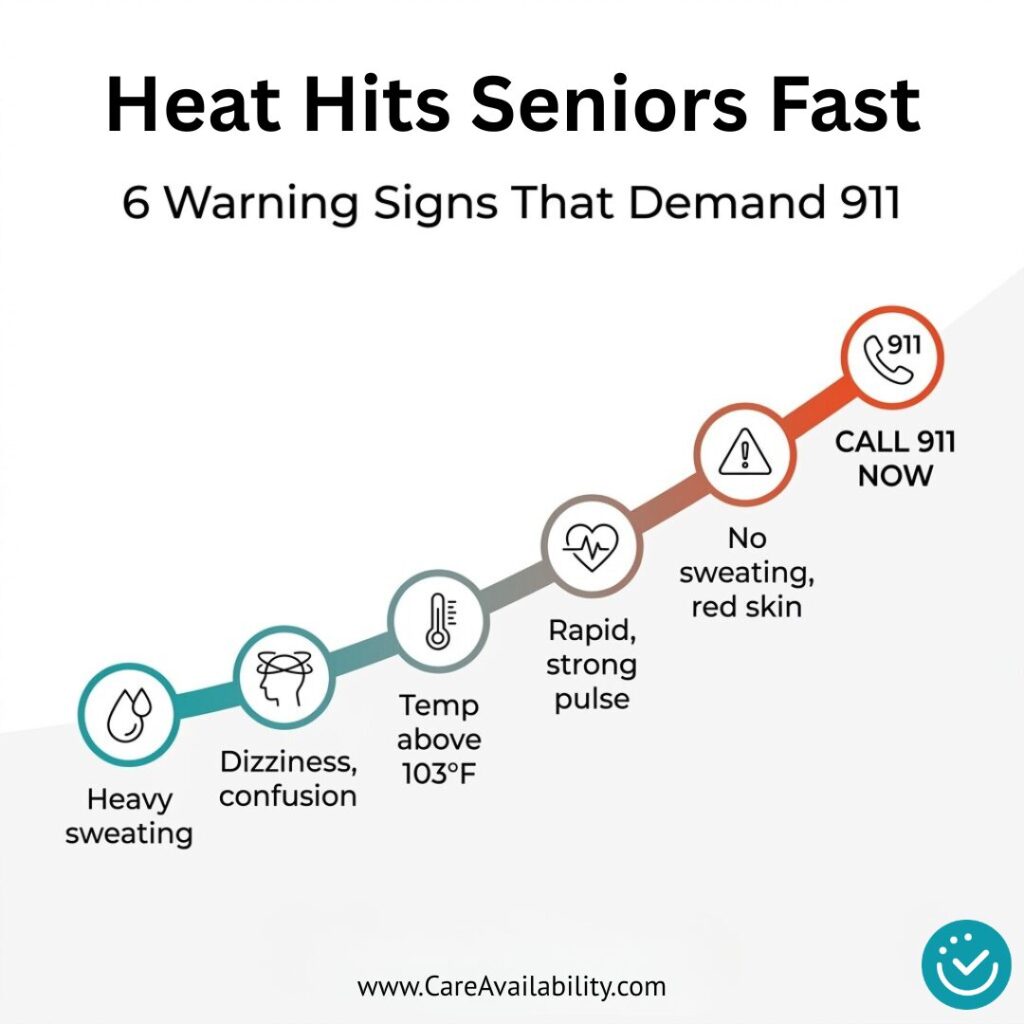
Heat stroke is a medical emergency. Call 911 right away if you see:
- Body temperature above 103°F
- Hot, red, dry skin with no sweating
- Rapid, strong pulse
- Confusion, slurred speech, or unconsciousness
- Seizures
What to do: Call 911 immediately. Move the person to a cooler place. Use cool cloths or a cool bath to lower body temperature. Do not give fluids if the person is unconscious or confused.
Prevention Strategies That Work
Most heat-related illness is preventable. These strategies work when you use them consistently.
Stay Hydrated
Older adults need to drink water throughout the day, even when they do not feel thirsty. Thirst is not a reliable indicator of hydration needs as we age.
Practical hydration tips:
- Drink water every hour, not just when thirsty
- Keep a water bottle within reach at all times
- Set phone reminders to drink water
- Eat water-rich foods like watermelon, cucumbers, and oranges
- Limit caffeine and alcohol, which increase dehydration
- Avoid sugary drinks that can worsen dehydration
If you are caring for someone with fluid restrictions due to heart or kidney disease, talk to their doctor about safe hydration levels during hot weather.
Keep Indoor Spaces Cool
Air conditioning is the most effective way to prevent heat-related illness. If the home does not have air conditioning, you have other options.
Cooling strategies:
- Use fans to circulate air, but know that fans alone are not enough when temperatures exceed 95°F
- Close blinds and curtains during the hottest part of the day
- Open windows at night when temperatures drop
- Spend time in air-conditioned public spaces like libraries, shopping malls, or senior centers
- Take cool showers or baths
- Use cool, damp towels on the neck, wrists, and forehead
Many communities offer cooling centers during heat waves. Check with your local area agency on aging or health department for locations near you.
Dress for the Heat
Clothing choices matter more than you might think.
Choose loose-fitting, lightweight, light-colored clothing made from natural fabrics like cotton or linen. These materials allow air to circulate and help sweat evaporate.
Wear a wide-brimmed hat when going outside. Use sunscreen with SPF 30 or higher to prevent sunburn, which interferes with the body’s ability to cool itself.
Time Outdoor Activities Carefully
The sun is strongest between 10 a.m. and 4 p.m. Plan outdoor activities for early morning or evening when temperatures are cooler.
If you must be outside during peak heat:
- Take frequent breaks in the shade or indoors
- Reduce physical activity intensity
- Watch for signs of overheating
- Bring water and drink it regularly
Gardening, walking, and other activities can wait until the temperature drops. Your health is more important than the task list.
Review Medications
Some medications increase heat sensitivity. Talk to the doctor or pharmacist about whether any current medications affect heat tolerance.
Medications that can increase heat risk include:
- Diuretics (water pills)
- Blood pressure medications
- Antihistamines
- Antidepressants
- Antipsychotics
- Stimulants
Do not stop taking prescribed medications without talking to a doctor first. Instead, take extra precautions to stay cool and hydrated.
Special Considerations for Those Living Alone
Older adults who live alone face additional risk during heat waves. They may not have someone checking on them regularly, and they may not recognize their own symptoms until it is too late.
Create a check-in system. Family members, neighbors, or friends should call or visit daily during extreme heat. Many communities offer telephone reassurance programs where volunteers make daily wellness calls.
Keep emergency contacts visible. Post important phone numbers near the telephone and program them into the cell phone. Include family members, neighbors, the doctor, and 911.
Consider a medical alert system. These devices allow someone to call for help if they become ill and cannot reach the phone.
When Home Care Can Help
Professional caregivers can monitor for heat-related symptoms, ensure adequate hydration, and provide transportation to cooling centers or air-conditioned locations.
Home care services include:
- Companionship and regular check-ins
- Medication reminders
- Meal preparation with hydrating foods
- Light housekeeping to maintain a cool environment
- Transportation to appointments or cooling centers
If you are considering home care options, CareAvailability.com lists providers in your area. You can search by location, compare services, and contact providers directly. No referral fees. No middlemen. Just clear information when you need it.
What Assisted Living and Memory Care Communities Do
Residential care communities have protocols in place to protect residents during extreme heat.
Staff monitor indoor temperatures, ensure residents stay hydrated, and watch for early warning signs of heat illness. Activities move indoors during the hottest parts of the day. Air conditioning is maintained throughout the building.
For families considering a move to assisted living or memory care, ask about summer heat protocols during your tour. Find out how staff monitor residents, what cooling systems are in place, and how they handle power outages during heat waves.
Create Your Heat Safety Plan Now
Do not wait for a heat wave to start planning. Take these steps today:
1. Check your cooling systems. Test air conditioners and fans before you need them. Replace filters. Make repairs now, not during the first 100-degree day when repair services are backed up for weeks.
2. Stock up on supplies. Keep extra water, electrolyte drinks, and cooling supplies like spray bottles and damp cloths on hand.
3. Identify cooling locations. Know where the nearest cooling centers, libraries, and air-conditioned public spaces are located. Save addresses and hours in your phone.
4. Build your support network. Exchange phone numbers with neighbors. Set up a buddy system. Make sure someone will check on you, and commit to checking on someone else.
5. Talk to your doctor. Review medications and health conditions that might increase heat sensitivity. Ask what precautions you should take.
6. Keep emergency supplies ready. Have a list of emergency contacts, medications, and medical conditions posted where caregivers or emergency responders can find it.
Resources for Families and Caregivers
You do not have to figure this out alone. Resources exist to help you keep those 50 and better safe during summer heat.
Local Area Agencies on Aging can connect you with cooling centers, transportation services, and wellness check programs. Find your local agency through the National Association of Area Agencies on Aging.
211 helpline provides information about community resources, including cooling centers and emergency assistance. Dial 211 from any phone or visit 211.org.
CareAvailability.com helps you find and compare care options when you need additional support. Search for home care agencies, assisted living communities, or other services in your area. Every licensed provider is listed. You contact them directly. Free, comprehensive, and private.
The Right Resource at the Right Time
Summer heat is serious, but it does not have to be dangerous. With the right information and a solid plan, you can keep yourself or your loved one safe and comfortable all season long.
Start with the basics: stay hydrated, keep cool, watch for warning signs, and check in regularly. Build from there based on individual needs and circumstances.
If you need help finding care options or support services, we are here. CareAvailability.com exists to connect families with the resources they need, when they need them, without pressure or hidden agendas.
Stay cool. Stay safe. And know that help is available when you need it.