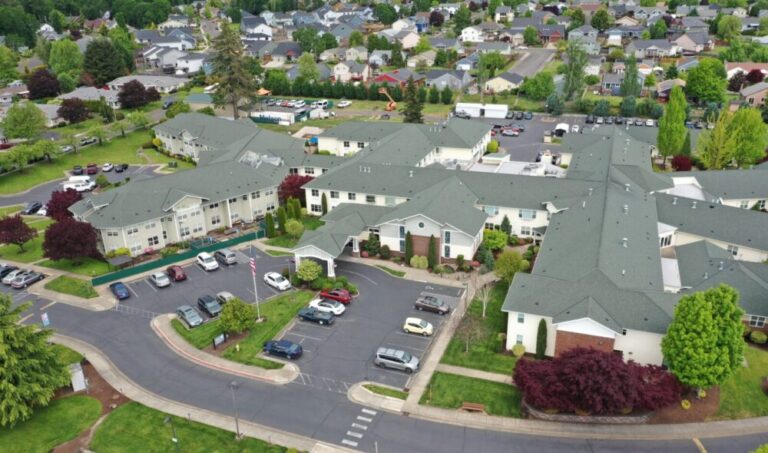
540 South Main Street Mount Angel, OR
Skilled Nursing
17 skilled nursing providers near Salem
Search Providers
540 South Main Street Mount Angel, OR
★ Premium
5.1 mi
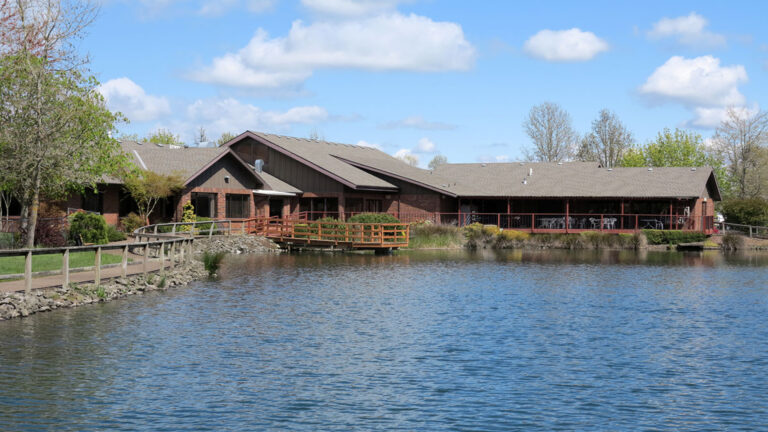
5210 River Road N. Keizer, OR
★ Premium
2.7 mi
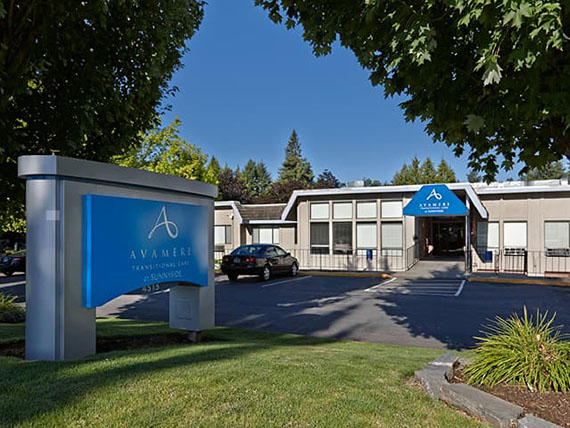
4515 Sunnyside Road SE Salem, OR
★ Premium
14.6 mi
377 NW Jasper Street Dallas, OR
1023 6th Ave SW Albany, OR
601 Evergreen Road Woodburn, OR
1525 Monmouth Street Independence, OR
820 Cottage Street NE Salem, OR
4062 Arleta Avenue NE Keizer, OR
411 SE Sheridan Road Sheridan, OR
Learn More
Skilled nursing facilities in Salem, Oregon provide 24-hour nursing care, post-acute rehabilitation, and long-term care for seniors with complex medical needs in the state capital and the Willamette Valley's largest city outside Portland, a government and agricultural hub with practical senior care access. Salem Health Hospitals and Clinics provides post-acute referrals, inpatient rehabilitation, and specialty medical services that connect hospital patients to skilled nursing facilities throughout the Salem area.
Skilled nursing facilities in Salem operate under the Nursing Facility license issued by the Oregon Department of Human Services, Aging and People with Disabilities, and all facilities participating in Medicare or Medicaid must also meet federal CMS certification requirements. Medicare covers short-term skilled nursing stays following a qualifying hospital admission, and Oregon Medicaid covers nursing facility services for eligible seniors for residents who meet clinical and financial eligibility.
Families searching for skilled nursing in Salem, Oregon will find options across the city and surrounding Keizer, Silverton, and Dallas. Salem's state capital position ensures strong access to Oregon's elder care agencies, and its below-Portland pricing combined with Salem Health's regional capabilities make it a practical and accessible option for Willamette Valley families. The CMS Care Compare tool at medicare.gov allows families to compare Five-Star Quality Ratings for any Medicare- or Medicaid-certified facility, and the Oregon ADRC can connect families with local placement support.
Salem is Oregon's state capital and the heart of the Willamette Valley wine and agricultural region, with the Oregon State Capitol complex, Willamette University's campus, the Oregon Garden botanical preserve 30 minutes east, Silver Falls State Park's Trail of Ten Falls within 45 minutes, and the Salem Arts Festival and World Beat Cultural Festival reflecting the city's diverse cultural programming. The Willamette River Mission Mill Museum and Reed Opera House's historic preservation reflect Salem's pioneer heritage.
Oregon does not tax Social Security income, and Oregon Medicaid covers nursing facility services for eligible seniors. The Portland metro has the highest concentration of skilled nursing facilities, with OHSU driving significant post-acute referral volume and Oregon's strong long-term care regulatory framework setting quality standards.
Oregon Department of Human Services, Aging and People with Disabilities - Office of Licensing and Regulatory Oversight; Oregon Health Authority, Health Care Regulation and Quality Improvement
Oregon Department of Human Services - Aging and People with Disabilities oversees nursing facility licensing in Oregon and provides access to inspection records and the Long-Term Care Registry.
Oregon Health Plan - Oregon Medicaid administers nursing facility benefits for eligible Oregon residents. Contact OHA for eligibility determination, application guidance, and long-term care enrollment support.
Oregon Long-Term Care Ombudsman advocates for residents of nursing facilities statewide, investigates complaints, and provides free services to residents and families. Phone: (800) 522-2602
Oregon Department of Human Services - Aging and People with Disabilities coordinates elder services and Area Agencies on Aging across the state, providing long-term care navigation and caregiver support resources.
Eldercare Locator helps Oregon families find local senior services and skilled nursing guidance. Phone: 1-800-677-1116
Skilled Nursing Facilities (SNFs), commonly called Nursing Homes, provide the highest level of medical care available outside of a hospital. They are staffed 24 hours a day by licensed registered nurses, licensed practical nurses, and certified nursing assistants, supported by a full rehabilitation team including physical, occupational, speech, and respiratory therapists.
Skilled nursing is appropriate when an individual has complex medical needs that cannot safely be managed at home or in an Assisted Living setting. This includes people recovering from surgery or a hospital stay, managing a serious infection or neurological event, or living with a chronic condition that requires continuous clinical supervision.
SNF is the Medicare and Medicaid regulatory term for these facilities. Care is always directed by a physician, and every resident has a formal, individualized care plan reviewed on a regular schedule by the full treatment team.
Skilled nursing is typically prescribed following or during:
By the numbers:
Skilled nursing serves two distinct groups, and understanding which applies to your situation sets realistic expectations.
Short-term Rehabilitation
Most Medicare-covered stays fall into this category. Residents arrive following a hospitalization for a joint replacement, stroke, serious infection, or cardiac event and work toward regaining function and returning home. Stays typically range from two to six weeks. The focus is intensive daily therapy and medical stabilization.
Long Term Residential Care
Some residents require skilled nursing on a permanent or indefinite basis. These are typically individuals with terminal illness, advanced dementia, significant disability, or conditions that make safe independent living impossible. Long-term care continues as long as the individual's medical and functional needs require that level of support.
24-Hour Nursing Coverage: Registered nurses and licensed practical nurses are on duty around the clock. Medical changes are managed on-site by trained clinical staff, not by calling 911 or waiting for a home health visitor.
Physician-Supervised Care Plans: Every resident has a physician-directed care plan reviewed regularly by the treatment team. Attending physicians or nurse practitioners conduct routine visits and receive direct communication when a resident's condition changes.
Comprehensive Rehabilitation Services: Physical therapy, occupational therapy, speech-language pathology, and respiratory therapy are available on-site. Daily rehabilitation is the primary driver of successful return-to-home outcomes for short-term residents.
Complex Medical Management: Skilled nursing facilities are equipped to manage conditions that would otherwise require hospitalization: IV antibiotic therapy, wound care, ventilator and trach management, post-surgical monitoring, and dialysis coordination.
Medicare Coverage for Qualifying Stays: For qualifying post-hospital stays, Medicare Part A covers the full cost for the first 20 days. Days 21 through 100 are covered with a daily coinsurance of $204.00 per day in 2024. (Medicare.gov, 2024)
Coordinated Discharge Planning: Social workers and discharge planners help coordinate the transition home or to a lower level of care, including arranging home health services, durable medical equipment, and follow-up appointments before the resident leaves.
Medication Management: Licensed nurses administer all medications, reducing the risk of errors, missed doses, or dangerous drug interactions -- a significant benefit for residents managing multiple prescriptions for chronic conditions.
Nutritional Support: Registered dietitians assess residents and coordinate with the culinary team on medically appropriate meals. SNFs support diabetic diets, renal diets, low-sodium requirements, and dysphagia (swallowing difficulty) protocols.

Upon admission, a licensed nurse completes a baseline health assessment and reviews the physician's orders and hospital discharge summary. Federal regulations require the facility to complete a comprehensive Minimum Data Set (MDS) assessment within 14 days of admission. This assessment drives the individualized care plan and determines the Medicare payment category.
Within 21 days, the facility must hold a care conference involving the resident, family members or legal representative, and the core care team. This is one of the most important meetings a family can attend. Come prepared with questions about therapy goals, expected discharge timeline, medication changes, and any concerns about the plan of care.
Nursing care is continuous. Staff monitor vital signs, manage wound care, and administer medications throughout the day and night. For short-term residents, daily rehabilitation sessions typically run one to three hours depending on therapy orders and insurance coverage.
Room types vary by facility. Most offer both semi-private (shared) and private rooms. Private rooms carry a higher daily rate. Residents are encouraged to bring personal items -- photographs, familiar bedding, a favorite chair -- to make the space feel like home.
Meals are served three times daily, typically in a communal dining room. Residents who need feeding assistance receive it from nursing aides. Therapeutic diets are coordinated by the dietary team.
Activities and social programming are required by federal regulation. Facilities must provide programming that addresses residents' physical, social, and emotional wellbeing. Most offer scheduled exercise classes, music and pet therapy, spiritual services, and organized group activities.
Federal law guarantees skilled nursing residents a set of protected rights, including:
Facilities must provide a written description of these rights at admission. Most states have a Long-Term Care Ombudsman program that advocates for residents and receives complaints. (Administration for Community Living, ACL.gov)
Staffing levels directly affect the quality of care. CMS tracks and publishes staffing data for every certified nursing facility through the Nursing Home Care Compare tool at Medicare.gov. Key metrics include:
In 2024, CMS finalized a rule requiring nursing homes to provide a minimum of 3.48 total nursing hours per resident per day, including at least 0.55 hours from a registered nurse. (Federal Register, April 2024)
Paying for skilled nursing care depends on several factors: the level of care needed, the individual's income and savings, the state and location of the facility, and whether the resident is a veteran. Skilled nursing is one of the few senior care types with significant public funding options, though private pay remains the primary source for many families.
PRIVATE PAY -- YES
Many families cover skilled nursing costs entirely with private funds, including retirement savings, personal savings, pension income, and investment accounts. Family contributions are also common. Private pay gives families the most flexibility in choosing a facility.
MEDICARE -- MAYBE
Medicare Part A covers skilled nursing care only under specific conditions:
Coverage structure for 2024:
(Medicare.gov, 2024)
MEDICAID -- MAYBE
Medicaid is a joint federal and state program that can cover long-term skilled nursing costs for individuals who meet both medical and financial eligibility requirements. Eligible participants include low-income adults, elderly adults, and people with disabilities.
Skilled nursing falls under Medicaid's Nursing Facility Services benefit. Eligibility criteria, income and asset limits, and reimbursement rates vary by state. Every state has its own Medicaid program, and not all facilities accept Medicaid as payment.
To determine eligibility, contact your state Medicaid office or a local eldercare benefits counselor. You can also apply directly at Medicaid.gov.
LONG-TERM CARE INSURANCE -- MAYBE
Long-term care insurance policies are designed specifically to cover services like skilled nursing, assisted living, and home care. Policies purchased earlier in life (typically in a person's 50s or 60s) have lower premiums and broader coverage.
Nearly 70 percent of people age 65 and older will need some form of long-term care during their lifetime. (U.S. Department of Health and Human Services, LongTermCare.gov) Planning ahead significantly reduces the financial burden on individuals and families.
Policy benefits vary widely. Review the elimination period, daily benefit amount, benefit period, and inflation protection before selecting a policy.
VETERANS BENEFITS -- MAYBE
The VA Aid and Attendance benefit is available to some veterans and surviving spouses who require assistance with daily activities or reside in a care facility. Monthly benefit amounts for 2024:
(U.S. Department of Veterans Affairs, Benefits.VA.gov, 2024)
Additional VA programs include Community Living Centers (VA-operated nursing homes) and the Veteran-Directed Care program. Eligibility is based on service history, discharge status, and medical need.
Choosing the right skilled nursing facility is one of the most important decisions a family will make. Quality varies significantly from one facility to the next, and the factors below give you a structured way to compare options.
The Centers for Medicare and Medicaid Services publishes a 5-star quality rating for every certified skilled nursing facility through the Nursing Home Care Compare tool at Medicare.gov. Ratings are based on three categories: health inspections, staffing levels, and quality measures. Each category receives its own star rating in addition to an overall rating.
A 5-star overall rating is the highest. A 1-star rating indicates below-average performance across multiple categories. Review each individual category rather than relying solely on the overall score -- a facility may rate high on quality measures but low on recent inspection findings.
Staffing is one of the strongest predictors of care quality. Research consistently links higher registered nurse hours per resident per day with better clinical outcomes, fewer hospitalizations, and lower mortality rates. When evaluating a facility, ask specifically about:
Not all skilled nursing facilities offer the same clinical services. If your loved one has specific needs, confirm the facility can support them before choosing:
State health departments inspect certified SNFs and report findings to CMS. These inspection reports are publicly available on Medicare.gov and document any deficiencies cited, their severity level, and whether they were corrected. Review the most recent two to three years of inspections for any pattern of concerns related to resident safety, neglect, medication errors, or staffing.
For short-term rehab stays, ask the facility:
Schedule a formal tour, but also visit a second time without an appointment. Observe:
Your impressions during an unannounced visit are often more accurate than what you see on a scheduled tour.
The average monthly cost of skilled nursing in Salem is approximately $15,529, which is equal to the Oregon state average of $15,529 per month. This makes Salem an affordable option compared to other areas in Oregon.
How to pay for skilled nursingFrequently Asked Questions
Federal law limits the circumstances under which a facility may discharge a resident without consent. Valid reasons include: the resident's health has improved and they no longer require SNF level care; the resident's needs cannot be met by the facility; the health or safety of other residents is endangered; the resident has not paid for services after reasonable notice; or the facility closes. The facility must provide written notice at least 30 days in advance in most cases, and residents have the right to appeal.
Every certified SNF must have a formal grievance process. Families can submit concerns directly to the facility's administrator or social worker. If the concern is not resolved, they can contact the state Long-Term Care Ombudsman, an independent advocate who investigates complaints at no cost. Contact information for your state's ombudsman is available through the Eldercare Locator at eldercare.acl.gov.
Under federal law, residents have the right to receive visitors of their choosing at the time of their choosing. Facilities may set reasonable visiting hours for the general public, but cannot restrict access from a resident's chosen visitors when the resident wants to see them.
Yes. Federal regulations require SNFs to provide ongoing activities that meet each resident's physical, mental, and social wellbeing needs. A qualified activities director must assess residents and develop individualized activity plans, which may include exercise programs, arts and crafts, music therapy, pet therapy, religious services, and outings.
The terms are often used interchangeably. Nursing Home is the common, informal term. SNF is the official Medicare and Medicaid regulatory designation. All Medicare- and Medicaid-certified nursing homes are technically SNFs, though some older or private-pay facilities use the term nursing home without holding SNF certification.
Skilled Nursing Facilities provide 24-hour nursing care and medical supervision for individuals with complex health needs. They offer rehabilitation services, medical management, and assistance with daily activities under the direction of licensed healthcare professionals. Usually, Skilled Nursing is short-term acute care but they may also offer long term care and intermediate care.
Short-term skilled nursing is post-acute care following a hospitalization, with a goal of rehabilitation and discharge home. It is often covered in part by Medicare. Long-term skilled nursing is for individuals who require ongoing 24-hour nursing care indefinitely due to chronic illness, disability, or advanced age. Long-term stays are generally not covered by Medicare and are funded through Medicaid, long-term care insurance, or private pay.
Skilled nursing provides 24-hour care from licensed nurses under physician supervision. It is designed for individuals with active medical needs, post-surgical recovery, or conditions requiring clinical oversight. Assisted living provides support with daily activities in a residential setting but does not include around-the-clock nursing care. If a medical condition worsens to the point that it cannot be managed in assisted living, a transfer to skilled nursing is often required.
Medicare Part A covers SNF care when the individual has had a qualifying hospital stay of three consecutive midnights, enters the SNF within 30 days of discharge, requires skilled care on a daily basis as ordered by a physician, and receives care in a Medicare-certified facility. Coverage is not automatic and must be established at admission. If Medicare coverage is denied, families have the right to appeal.
You have the right to choose any Medicare-certified skilled nursing facility that has an available bed and can meet your loved one's medical needs. The hospital discharge planner will often suggest options, but the final choice belongs to the patient or their authorized representative.
When Medicare coverage runs out -- after day 100, or earlier if the individual no longer meets the daily skilled care requirement -- the family must arrange alternate payment. Options include Medicaid (if the resident meets financial eligibility), long-term care insurance, or private pay. A social worker at the facility should help families plan for this transition well before coverage ends.
Use our search tool to find skilled nursing providers near Salem. Contact them directly. No middleman, no referral fees.