★ Premium
14.7 mi
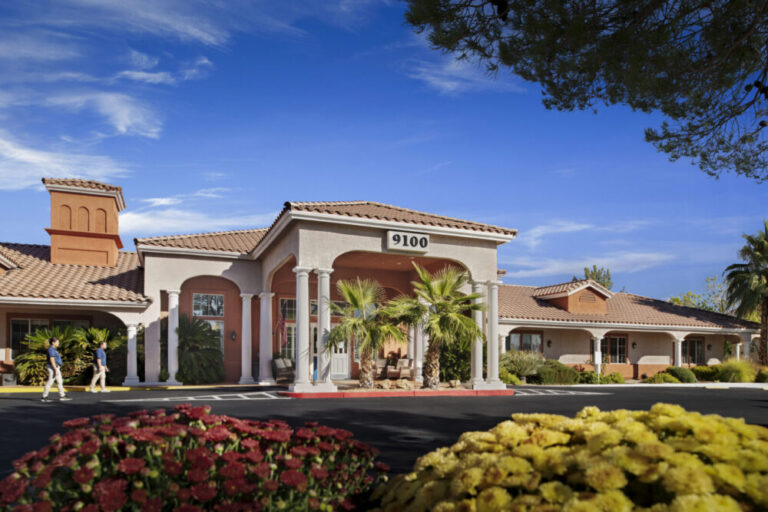
9100 West Desert Inn Road Las Vegas, NV
Memory Care
4 memory care providers near Henderson
Search Providers
★ Premium
14.7 mi
9100 West Desert Inn Road Las Vegas, NV
3185 E. Flamingo Road Las Vegas, NV
3250 S. Fort Apache Road Las Vegas, NV
7540 Smoke Ranch Road Las Vegas, NV
★ Premium
0 mi
1845 116th Ave NE Bellevue, WA
★ Premium
0 mi
1660 Oak Park Blvd Pleasant Hill, CA
★ Premium
0 mi
16360 NW Avamere Ct Portland, OR
★ Premium
0 mi
5555 Paradise Drive Corte Madera, CA
★ Premium
0 mi
4585 West Lake Sammamish Parkway Northeast Redmond, WA
★ Premium
0 mi
1885 Skyline Drive South Ogden, UT
Learn More
Memory care in Henderson, Nevada provides secure, structured living environments with specialized dementia programming for seniors diagnosed with Alzheimer's disease and related conditions in Clark County's second-largest city, with master-planned communities like Green Valley and Anthem that have become among the most popular destination retirement communities in the Western United States. St. Rose Dominican Hospital (Dignity Health) and Dignity Health Medical Group provide geriatric neurology, dementia care, and specialty medical services that support memory care residents throughout the Henderson area.
Memory care settings in Henderson operate under the Residential Facility for Groups (RFG) license with memory care requirements, issued by the Nevada Department of Health and Human Services, with additional standards for secured environments, dementia-trained staff, and specialized programming beyond standard assisted living requirements. Nevada Medicaid's Home and Community Based Services Waiver may cover memory care costs for eligible Henderson seniors who meet financial and nursing facility level of care criteria.
Families searching for memory care in Henderson, Nevada will find a large and premium market spanning the Green Valley, Henderson proper, and Anthem communities. Henderson's planned community character, desert resort amenities, and Nevada's tax-favorable environment make it one of the Southwest's most sought-after retirement and assisted living destinations. The Alzheimer's Association Nevada Chapter and the Nevada ADRC are the recommended starting points for families navigating memory care placement in the Henderson area.
Henderson is consistently ranked one of the safest and most family-friendly cities in the United States, with master-planned communities like Green Valley and Anthem built specifically to provide walkable, accessible, and amenity-rich environments. The Clark County Wetlands Park - a 2,900-acre nature preserve in the heart of the urban area - gives seniors access to bird watching, walking trails, and desert wetland scenery within suburban Henderson.
Nevada has no state income tax and does not tax Social Security income - one of the most favorable financial environments in the nation for memory care families. The Alzheimer's Association Nevada Chapter provides caregiver support and the 24/7 Helpline.
Many states license Memory Care as specialized units within assisted living facilities with additional requirements for staff training in dementia care, secure environments, and specialized programming.
**Nevada Department of Aging** provides information about Memory Care options, dementia care resources, and caregiver support services for families navigating Alzheimer's and dementia care.
**Alzheimer's Association Nevada Chapter** offers a 24/7 Helpline (1-800-272-3900), support groups for caregivers, education programs about dementia care, and assistance finding Memory Care facilities. The Alzheimer's Association provides free resources for families evaluating Memory Care options.
**Nevada Medicaid** administers programs that may cover Memory Care services for eligible seniors with dementia diagnoses who meet financial and functional criteria.
**Nevada Long-Term Care Ombudsman** advocates for residents in Memory Care facilities and investigates complaints about dementia care quality and residents' rights.
**Eldercare Locator** connects families with local Memory Care resources, adult day programs with dementia care, and caregiver support services.
Memory care is a specialized form of senior residential care designed for individuals diagnosed with Alzheimer's disease, dementia, or other progressive cognitive conditions. More than 6 million Americans are currently living with Alzheimer's disease, a number projected to nearly double by 2050. (Alzheimer's Association, 2023)
Unlike standard assisted living, memory care communities employ staff members who have received specialized training in dementia care techniques and behavioral management. These communities maintain higher staff-to-resident ratios, implement secured environments to prevent wandering, and build programming around cognitive stimulation and emotional engagement specific to dementia progression.
Memory care may operate as a standalone community or as a dedicated wing within a larger senior care campus such as a Continuing Care Retirement Community (CCRC). Regardless of the setting, the defining characteristics remain consistent: a secure environment, specialized staff, and care that honors each resident's history and preferences.
Key distinction: Memory care is not a nursing home. Nursing homes provide 24-hour skilled medical and nursing care. Memory care prioritizes a residential, home-like setting with specialized programming and safety infrastructure specifically designed for cognitive impairment.
Memory care fits within a broader spectrum of senior living options. Understanding the differences helps families match care needs to the right setting:
Memory care communities provide environments specifically designed to support the unique needs of individuals living with Alzheimer's disease and other forms of dementia. Research shows that structured routines, familiar surroundings, and purposeful activities can reduce behavioral symptoms and improve quality of life in people with cognitive impairment. (National Institute on Aging)
The safety infrastructure within memory care communities addresses a core challenge of dementia care: wandering. An estimated 60 percent of individuals with dementia will wander at some point, creating serious safety risks at home or in standard residential settings. (Alzheimer's Association)
Most memory care communities include the following services as part of the monthly rate:
Important note on variation: State licensing requirements for memory care vary widely across the United States. Staffing ratios, physical plant requirements, and allowable care levels differ by state. When evaluating communities, always request a copy of the most recent state inspection report. A question worth asking every community: "How do your care standards exceed the minimum state requirements?"
Memory care typically costs more than standard assisted living due to specialized staff training and higher caregiver ratios. For these services, Medicare is NOT an option for payment.Understanding what payment sources are available, and what they do not cover, is the most important financial planning step families can take.
The majority of families pay for memory care through a combination of personal and family funds. Common sources include:
Medicaid coverage for memory care varies entirely by state. Not all memory care communities accept Medicaid, and Medicaid typically requires spending down assets before qualifying.
Long-term care insurance can be one of the most effective ways to plan ahead for memory care costs. Nearly 75 percent of people over the age of 65 will require some form of long-term care. (U.S. Department of Health and Human Services)
The VA Aid and Attendance benefit is available to eligible veterans and surviving spouses who require help with daily activities, including those residing in memory care communities.
Choosing a memory care community is one of the most consequential decisions a family will make. The right community does more than provide safe housing -- it provides meaningful daily life for a loved one at a vulnerable time. Approach the evaluation methodically and visit more than once before deciding.
Do not just follow the tour. Pay attention to what you see on your own:
Get to know the Executive Director, Director of Nursing or Care, Lead Activities Director, and even the Chef or Janitor. If you feel confident and comfortable in those conversations, trust that signal. Leadership culture shapes every interaction in the building. A community where the Executive Director knows residents by name is a community that takes care seriously.
Review the state inspection report. Before making a final decision, request a copy of the community's most recent state licensing inspection. These reports are public record and document any deficiencies cited during regulatory review. Ask the community directly: how were any cited issues resolved?
Frequently Asked Questions
Memory care is a specialized form of senior residential care designed for individuals living with Alzheimer's disease, dementia, or other progressive cognitive conditions. Memory care communities offer secured environments, dementia-trained staff, higher caregiver-to-resident ratios, and structured programming designed to support residents with memory loss. They may operate as standalone communities or as dedicated wings within a larger senior care campus.
Memory care may be the right option when a loved one with dementia is experiencing frequent wandering, repeated safety incidents at home, significant behavioral changes such as aggression or severe agitation, or requires more supervision than family caregivers can safely provide. A geriatrician, neurologist, or social worker can help families evaluate readiness and timing. Safety and quality of life for both the individual and their caregivers are the primary signals.
Yes, and in many cases an earlier move works in the resident's favor. People in the early stages of dementia are better able to adjust to a new environment, build relationships with staff, and participate in programming while their cognitive abilities are still relatively intact. Waiting until a crisis -- a fall, a wandering incident, caregiver burnout -- often means the transition happens under more difficult circumstances. That said, early-stage individuals may also do well in assisted living or at home with support services, depending on their specific needs and living situation. The right timing is different for every family.
A geriatrician, neurologist, or geriatric care manager can help families evaluate whether the timing is right. Many families wait longer than they need to -- earlier transitions often allow residents to adjust more successfully to a new environment.
Memory care activity programming is specifically designed to engage residents with cognitive impairment in meaningful, therapeutic ways. Common activities include:Music therapy: Familiar music has been shown to reduce agitation and improve mood in people with dementia.
When touring a community, ask to see the activity calendar and observe a session in progress. The quality of programming is one of the clearest indicators of how much a community invests in residents' daily quality of life.
The national median cost of memory care is approximately $5,000 per month, or roughly $60,000 per year. Memory care is typically 20 to 30 percent more expensive than standard assisted living, reflecting higher staffing ratios and specialized security infrastructure. Costs vary significantly by location, community type, and level of care needed. (Genworth Cost of Care Survey, 2023)
Memory care and assisted living are both residential senior care settings, but they serve different populations. Assisted living supports seniors who need help with daily activities but do not require specialized cognitive care. Memory care is designed specifically for individuals with Alzheimer's disease and dementia, featuring secured environments, dementia-specific staff training, and structured programming designed for cognitive decline. Memory care typically costs 20 to 30 percent more per month than assisted living.
No. Memory care and nursing homes are different levels of care, and the distinction matters. Nursing homes -- also called skilled nursing facilities -- provide 24-hour medical and nursing care for residents with complex or acute health needs. Memory care prioritizes a residential, home-like setting with specialized programming, dementia-trained staff, and safety infrastructure designed specifically for cognitive impairment. A person in memory care does not necessarily need the level of medical oversight that a nursing home provides. When evaluating options for a loved one with dementia, memory care is often the more appropriate and less clinical choice -- unless significant medical needs are present.
The average length of stay in memory care varies depending on the stage of dementia at the time of admission and the individual's overall health. On average, residents live in memory care for two to three years, though stays ranging from several months to five or more years are common. (Alzheimer's Association) Planning for a multi-year stay is important when evaluating payment options and choosing a community that can support progression through later stages of the disease.
As dementia progresses to its later stages, some residents develop medical needs that exceed what a memory care community is licensed to provide. When this happens, a transition to a skilled nursing facility may become necessary. Common triggers include the need for a feeding tube, IV medications, wound care requiring licensed nursing oversight, or around-the-clock medical monitoring. A quality memory care community will communicate openly with families about this possibility well before a crisis occurs, outlining what specific care needs would require a transition and what that process looks like. When choosing a memory care community, ask directly: "At what point would my loved one need to leave, and how would that transition be handled?" This is one of the most important questions a family can ask.
Most memory care communities welcome family visits and recognize that family involvement is important to resident wellbeing. Because the environment is secured to protect residents, there is typically a check-in process at the entrance -- but this is for safety, not to restrict family access. Visit hours and policies vary by community. Some have open visiting hours while others ask that visits be scheduled around meals and activities to minimize disruption to residents' routines. Ask about visiting policies during your tour, and pay attention to how the community communicates with families about care updates and changes in condition. Regular, transparent communication is a sign of a well-run community.
In many cases, yes. Some memory care communities offer shared rooms or companion suites that allow couples to live together, even if only one partner has a dementia diagnosis. Policies vary by community -- some welcome both partners regardless of diagnosis, while others require both residents to meet certain care criteria. If keeping a couple together is a priority, ask about this directly when touring communities. It is one of the most important and under asked questions in the search process.
CareAvailability.com provides a searchable directory of memory care communities across the United States. You can search by ZIP code or city, compare communities side by side, and connect directly with local providers. When you find communities of interest, schedule in-person tours, ask about state inspection reports, and take time to observe staff interactions with current residents before making a decision.
Use our search tool to find memory care providers near Henderson. Contact them directly. No middleman, no referral fees.