Home Health
Home Health Providers
Browse 19,160 providers across 302 cities in 50 states. Page updated · Provider listings and openings update live.
What Is Home Health Care?
Home Health Care is skilled medical care delivered directly inside a patient's home by licensed healthcare professionals. It is not the same as non-medical Home Care or companion care. Home Health is ordered by a physician or other qualified provider and carried out by registered nurses, physical therapists, occupational therapists, and speech-language pathologists who follow a structured, physician-directed treatment plan.
Services typically begin following a hospitalization, surgery, or significant change in medical condition. The goal is to allow seniors to recover and manage complex health needs in the comfort of their own home, without requiring placement in a nursing facility or continued hospital stay.
The Home Health sector is substantial. According to the 2025 National Alliance for Care at Home Chartbook, there were 9,961 Medicare-certified Home Health agencies operating in the United States in 2024, serving approximately 2.7 million traditional Medicare beneficiaries and employing 1.758 million people - an increase of 18.2% from 2020. Just 6.2% of all Medicare beneficiaries currently utilize home health services, suggesting that many eligible seniors are unaware of what the benefit covers or how to access it.
How Home Health differs from other in-home services
Home Health is a medical service directed by a physician or qualified provider. This is what sets it apart from non-medical Home Care, which assists with daily tasks like bathing, dressing, and meal preparation but does not involve licensed clinical professionals and does not require a physician's order. Home Health also differs from facility-based care such as skilled nursing facilities or assisted living communities, because Home Health is delivered in the patient's home on a scheduled, intermittent visit basis rather than in a 24-hour residential setting.
Common reasons Home Health is ordered:
- Recovery following a hospital stay, surgery, or medical procedure
- Management of a new or worsening chronic condition such as heart failure, COPD, or diabetes
- Post-surgical wound care and monitoring
- Medication management following a significant health change
- Physical, occupational, or speech therapy after an illness or injury
- Disease education and self-management training for patients and family caregivers
Home Health is particularly valuable for individuals who need the clinical oversight of a nurse or therapist but do not require full-time institutional care. It supports recovery, promotes independence, and is one of the few senior care services with meaningful Medicare coverage for qualifying patients.
Benefits of Home Health Care
Home Health Care offers a combination of clinical quality and personal comfort that is difficult to match in any facility-based setting. For many families, it is the preferred option for post-acute recovery because it allows their loved one to receive professional medical oversight in a familiar environment.
Medical care delivered to the patient Skilled nursing and therapy services come directly to the patient. There is no transportation required, no waiting rooms, and no disruption to daily routines. Care is provided where the patient is most comfortable.
One of the few senior care services with substantial Medicare coverage Home Health is one of the few services covered under both Medicare Part A and Part B. For patients who meet eligibility criteria, Medicare covers the full approved cost of covered services with no copay for the visits themselves. This makes it one of the most financially accessible forms of skilled care available to seniors.
Personalized, one-on-one attention Unlike a facility setting where clinical staff serve many residents simultaneously, Home Health visits are dedicated entirely to one patient. The clinician focuses entirely on your loved one's condition, goals, and specific recovery needs during every visit.
Coordinated care across providers Home Health agency staff will talk to your doctor or other provider about your care plan and keep them updated on your progress. This coordination helps ensure that everyone involved in the patient's care is aligned on treatment goals, medications, and clinical progress.
Supports aging in place For seniors who want to remain in their own home, Home Health makes it possible to receive clinical-level care without transitioning to a facility. This is particularly meaningful for individuals managing chronic conditions over time, where ongoing professional support can help maintain function and quality of life.
A structured, accountable model of care Home Health is not informal assistance. Every patient receives a written care plan developed by a licensed professional in coordination with their physician. This plan defines the services, goals, frequency of visits, and anticipated duration, creating a framework of accountability for both the agency and the clinical team.
Access to durable medical equipment In addition to skilled visits, Medicare also covers durable medical equipment such as a wheelchair or walker, typically 80% of the Medicare-approved amount, as long as it meets certain criteria. This can be an important support for patients managing mobility limitations at home.
Licensing and Regulations
Home Health Care is one of the most regulated care settings in the United States. This oversight exists to protect patients, ensure consistent care standards, and maintain accountability for agencies billing federal healthcare programs. Understanding how this regulatory system works helps families make more informed decisions about the agencies they choose.
The Two-Layer Regulatory System
Home Health agencies operate under a dual layer of oversight: federal requirements set and enforced by the Centers for Medicare and Medicaid Services (CMS), and state-level requirements that vary by state. To participate in Medicare, an agency must be licensed pursuant to state or local law, or have approval as meeting the standards established for licensing by the state or locality. In most states, state licensure must be obtained before federal Medicare certification can be pursued. These two layers work in parallel, and an agency must remain in compliance with both to continue operating.
State Licensure
State licensure is the first regulatory requirement any Home Health agency must satisfy. Requirements differ significantly from state to state. Some states have detailed licensure processes with application reviews, site inspections, and ongoing renewal cycles. Others have minimal or no formal licensure requirements for agencies that do not participate in Medicare or Medicaid.
For agencies that do seek Medicare certification - which is required for Medicare reimbursement - state licensure is a prerequisite. State health departments or equivalent regulatory agencies oversee this process and conduct surveys to evaluate compliance before recommending an agency for federal certification.
Beyond agency licensure, individual clinical professionals must hold active state licenses specific to their discipline. Registered nurses, physical therapists, occupational therapists, and speech-language pathologists are each licensed and regulated at the state level. Most states require continuing education credits for license renewal, and licensees must practice within their state-defined scope of practice. Background check requirements for clinical personnel also vary by state.
Federal Medicare Certification and Conditions of Participation
To receive payment from Medicare or Medicaid, a Home Health agency must be Medicare-certified. This means the agency must demonstrate compliance with the federal Conditions of Participation (CoPs) for Home Health agencies, codified at Title 42, Part 484 of the Code of Federal Regulations. To qualify, an agency must be primarily engaged in providing skilled nursing services and other therapeutic services, have policies established by a professional group that includes one or more physicians and one or more registered nurses, and provide for supervision of those services by a physician or registered nurse.
CMS conducts oversight of certified agencies through state survey agencies and approved accrediting organizations. Surveys evaluate whether an agency meets all applicable Conditions of Participation. Agencies found out of compliance must correct deficiencies within a defined timeframe or risk having their Medicare certification suspended or terminated.
The Conditions of Participation cover all core aspects of agency operations, including:
- Patient rights and how those rights are communicated
- Comprehensive patient assessment at intake and throughout care
- Written care planning and physician coordination
- Staffing qualifications and competency standards
- Home health aide training and supervision
- Clinical recordkeeping and documentation
- Infection prevention and control practices
- Quality assessment and performance improvement programs
- Emergency preparedness and response protocols
Patient Rights Under Federal Regulations
Federal regulations require that every Home Health patient receive written notice of their rights before care begins. The agency must provide written notice of the patient's rights and responsibilities, including the agency's transfer and discharge policies. This notice must be understandable to persons with limited English proficiency and accessible to individuals with disabilities. Any staff member, regardless of whether they are employed directly or obtained under arrangement, is required to immediately report to the agency or appropriate authorities any incidence of mistreatment, neglect, or abuse, and any misappropriation of patient property.
Patients have the right to participate in their care planning, to be informed of all services and associated costs before care begins, and to file complaints without fear of retaliation. Agencies are required to provide contact information for the administrator and to have a documented process for investigating and responding to complaints.
The Written Care Plan Requirement
Each patient must receive an individualized written plan of care, including any revisions or additions. The plan must specify the care and services necessary to meet the patient's needs as identified in the comprehensive assessment, including identification of the responsible discipline or disciplines, and the measurable outcomes the agency anticipates will occur as a result of implementing and coordinating the plan of care.
The plan of care must be reviewed and revised by the physician or allowed practitioner and the agency no less frequently than once every 60 days, beginning with the start of care date. The agency must promptly alert the relevant physician to any changes in the patient's condition or needs that suggest outcomes are not being achieved or that the care plan should be altered.
Comprehensive Patient Assessment and OASIS
Each patient must receive a patient-specific, comprehensive assessment. For Medicare beneficiaries, the agency must verify the patient's eligibility for the Medicare home health benefit, including homebound status, both at the time of the initial assessment visit and at the time of the comprehensive assessment.
A central component of this assessment is the OASIS - the Outcome and Assessment Information Set. Agencies must electronically transmit each completed OASIS assessment to the CMS system within 30 days of completing the assessment. The encoded OASIS data must accurately reflect the patient's status at the time of assessment. OASIS data is used by CMS to generate the quality ratings published on Care Compare, making accurate data submission a direct factor in how an agency's public quality profile is rated.
The comprehensive assessment must be updated as frequently as the patient's condition warrants due to a major decline or improvement in health status, but not less frequently than during the last five days of every 60-day care period, and within 48 hours of the patient's return home from a hospital admission of 24 hours or more.
Home Health Aide Training and Supervision Requirements
Federal regulations set minimum standards for home health aide training, competency evaluation, and ongoing supervision. A home health aide competency evaluation must be performed by a registered nurse in consultation with other skilled professionals as appropriate. A home health aide is not considered competent in any task for which they are evaluated as unsatisfactory.
Semi-annually, a registered nurse must make an on-site visit to the location where each patient is receiving care to observe and assess each home health aide while performing non-skilled care. If a deficiency in aide services is verified during an on-site visit, the agency must conduct retraining and a competency evaluation for the deficient and all related skills.
This supervisory requirement means that the registered nurse on your care team plays a monitoring role beyond their own visit schedule. They are also accountable for the quality of aide services delivered between skilled visits.
New in 2025: Acceptance-to-Service Policy Requirement
Effective January 1, 2025, CMS finalized a new Condition of Participation requiring Home Health agencies to develop and publish a written acceptance-to-service policy. The policy must be applied consistently to each prospective patient referred for home health care and must address criteria related to the agency's capacity to provide care, including the anticipated needs of the referred patient, the agency's caseload and case mix, staffing levels, and the skills and competencies of agency staff. Agencies are also required to make available to the public accurate information regarding the services they offer and any limitations related to specialty services, service duration, or service frequency.
For families, this requirement means that agencies are now obligated to be transparent about what they can and cannot provide before care begins. You can ask any agency to share their current acceptance-to-service policy and their publicly facing service description before agreeing to work with them.
Accreditation as an Additional Quality Signal
In addition to state licensure and Medicare certification, some agencies choose to pursue voluntary accreditation from a nationally recognized accrediting body. The three primary accreditors for Home Health agencies are:
- The Joint Commission
- CHAP (Community Health Accreditation Partner)
- ACHC (Accreditation Commission for Health Care)
These organizations are granted deeming authority by CMS, meaning that accreditation by one of them can serve as the basis for Medicare certification in place of a standard state survey. Accreditation requires agencies to meet standards that CMS has reviewed and determined to be equivalent to or more rigorous than the federal Conditions of Participation. Accreditation status is publicly verifiable and is a meaningful indicator of an agency's commitment to quality beyond the minimum required for Medicare participation.
Quality Assessment and Performance Improvement
Federal regulations require every Medicare-certified Home Health agency to operate a formal Quality Assessment and Performance Improvement (QAPI) program. This program must track clinical outcomes, identify areas where care quality can be improved, and demonstrate measurable improvement over time. QAPI requirements apply across all patient care processes and must be integrated into the agency's day-to-day operations.
CMS uses OASIS data submitted by agencies to calculate publicly reported quality measures including functional improvement rates, rates of hospitalization and emergency department use, and patient satisfaction scores. These measures feed directly into the Care Compare star ratings that families can review when evaluating agencies.
What These Regulations Mean for Patients and Families
For families choosing a Home Health agency, this regulatory framework provides important protections:
- Every Medicare-certified agency has been inspected against a defined federal standard and must maintain ongoing compliance to keep its certification
- Every patient must receive a written care plan before care begins, with measurable goals, assigned clinicians, and a defined review schedule
- Patient rights must be explained in writing before any hands-on care is provided
- Home health aides must be trained and competency-evaluated, with ongoing supervisory visits by a registered nurse
- Complaints must be accepted and investigated through a formal documented process
- Quality data is collected, reported to CMS, and made publicly available through Care Compare
These protections do not eliminate all risk, and quality genuinely varies across agencies. Using Care Compare ratings, asking about accreditation status, and reviewing the acceptance-to-service policy are all practical ways to apply this framework when making a care decision.
What to Expect with Home Health Care
How care begins
Home Health services start with an order from a physician, nurse practitioner, physician assistant, certified nurse midwife, or clinical nurse specialist. A face-to-face encounter with a qualified provider must occur within the 90 days prior to the start of home health care, or within the 30 days after the start of care. This encounter must be documented in a way that connects the clinical findings to the homebound status and need for skilled services.
Once the order is issued, the Home Health agency conducts an initial assessment at the patient's home, typically performed by a registered nurse or therapist. A comprehensive care plan is developed in coordination with the referring provider, outlining specific goals, services to be provided, frequency of visits, and the expected duration of care.
Medicare covers an initial 60-day episode of home health services. After that, the doctor must review the plan of care and recertify the need for ongoing services. If skilled care is still needed, Medicare may continue coverage in 30-day increments. Services continue only as long as there is a documented skilled care need.
The homebound requirement
To qualify for Medicare-covered Home Health, a patient must need part-time or intermittent skilled services and be homebound, meaning leaving home must not be recommended because of their condition, or they have trouble leaving home without help due to an illness or injury, and leaving normally takes a lot of effort.
Being homebound does not mean a patient is confined indoors at all times. Even if homebound, a patient can still leave home for medical treatment, religious services, and to attend a licensed or accredited adult day care center without putting homebound status at risk. Leaving home for short periods or for special non-medical events such as a family reunion, funeral, or graduation should also not affect homebound status.
What services look like in practice
In most cases, Medicare covers skilled nursing care and home health aide services up to 8 hours a day (combined), for a maximum of 28 hours per week. More frequent care may be available for a short time - less than 8 hours a day and up to 35 hours a week - if the provider decides it is medically necessary.
A typical visit lasts one to two hours and is conducted by a single licensed professional. Depending on the patient's care plan, a visit may include:
- Vital sign monitoring and clinical assessments
- Wound care and dressing changes
- Medication review and patient education
- Physical, occupational, or speech therapy exercises
- Disease management instruction and caregiver training
- Monitoring and reporting of any changes in condition to the physician
What Medicare does NOT cover under Home Health
Medicare home health care covers skilled nursing and therapy care. Unless an individual is receiving hospice care, custodial and around-the-clock care are not included. If care includes 24-hour care, meal delivery, homemaker services, or personal care only, Medicare will generally not cover those costs. Home Health aide services are only covered when the patient is also actively receiving skilled nursing or therapy services.
Who is on the care team
Registered Nurses (RNs) Registered nurses provide skilled medical oversight. They perform clinical assessments, change wound dressings, manage catheters, administer injections, oversee medications, and document changes in condition. The RN serves as the primary clinical coordinator between the patient, the care team, and the physician.
Physical Therapists (PTs) Physical therapists restore strength, mobility, and physical function following an injury, surgery, or illness. They design individualized exercise programs, address pain management, and teach patients and family members how to safely perform rehabilitative movements at home.
Occupational Therapists (OTs) Occupational therapists help patients relearn or adapt the skills needed for daily living. They may recommend adaptive equipment, address fine motor tasks, and help modify the home environment to improve safety and support independence.
Speech-Language Pathologists (SLPs) Speech therapists address communication difficulties and swallowing disorders resulting from stroke, neurological conditions, or other medical events. They also support cognitive rehabilitation and help patients and families manage changes in memory, reasoning, or language.
Certified Nursing Aides (CNAs) CNAs are trained and certified to provide hands-on clinical assistance at home. They may assist with personal care, support medication administration, assist with mobility devices, and apply simple wound dressings as directed by the supervising nurse. Training requirements and scope of practice vary by state.
Home Health Aides (HHAs) Home Health Aides assist with personal care and daily activities including bathing, dressing, meal preparation, and light housekeeping. They are trained professionals who can generally assist with medication reminders and mobility support. The tasks an HHA may perform are regulated at the state level and must be tied to an active skilled care need for Medicare coverage to apply.
Medical Social Workers Medical social workers are a less-discussed but valuable part of the Home Health care team. They assess emotional and social factors that may affect recovery, help connect patients and families with community resources, and assist with discharge planning and financial assistance guidance.
How to Pay for Home Health Care
Home Health has broader insurance coverage than most other in-home senior care services. Understanding the eligibility criteria for each payer source helps families avoid surprises and plan more confidently.
What Home Health typically costs without insurance
The 2025 CareScout Cost of Care Survey, which collected more than 25,000 rates from providers across the country between July and November 2025, provides the most current national cost benchmarks available.
The national median hourly rate for non-medical caregiver services (which includes home health aide and homemaker services, now reported together due to price convergence) rose to $35 per hour in 2025, a 3% year-over-year increase. Based on 44 hours of care per week, annual costs reached $80,080.
New to the 2025 survey, CareScout also reports for skilled nursing services delivered in the home - referred to as private duty nursing. The national median hourly rate for private duty nursing is $90 per hour, with a median per-visit rate of $160.
Costs vary considerably by state and region. Wyoming had the highest rates for non-medical caregivers at $46 per hour, while Mississippi had the lowest at $24 per hour. For private duty nursing, Kentucky had the highest per-visit rate at $302, while Ohio had the lowest at $85 per visit.
For comparison, the national median daily rate for a private room in a nursing home in 2025 was $355 per day ($129,575 annually), and a semi-private room was $315 per day ($114,975 annually). Home Health, particularly when Medicare-covered, is substantially more cost-effective than residential placement for patients who can be safely cared for at home.
Medicare - Most Common Payer for Qualifying Patients
Medicare can pay for home health care under either Part A or Part B. Part A may apply after a recent hospital stay, while Part B usually covers care that is medically necessary even without a prior hospitalization. This is an important distinction that many families miss: a hospital stay is not always required to access Medicare-covered Home Health services.
Medicare covers Home Health services when all of the following apply:
- The patient's care is ordered by a physician or other qualified provider
- A face-to-face encounter with the ordering provider has occurred within the required timeframe
- The patient meets Medicare's homebound criteria
- The care required is skilled, meaning it must be performed by or under the supervision of a licensed nurse or therapist
- Services are provided by a Medicare-certified Home Health agency
- The patient has Medicare Part A or Part B
For all covered home health services, patients pay nothing - no copayments or coinsurance. For durable medical equipment, patients pay 20% of the Medicare-approved amount after meeting the $257 Part B deductible in 2025.
Important distinctions:
- A prior hospital stay is NOT required to qualify under Medicare Part B. If the patient is homebound and has a skilled care need, coverage may be available regardless.
- A home health plan of care and certification is valid for a finite period of 60 days, and can be renewed by a doctor for additional 60-day periods as needed.
- Medicare does not cover 24-hour care, meal delivery, homemaker services, or personal care when it is the only service needed.
- Medicare is not a long-term care benefit. Coverage ends when the patient no longer has a skilled care need.
- Medicare Advantage (Part C) plans must provide the same home health coverage as Original Medicare. As of 2024, 13.7 million Americans were enrolled in both Medicare and Medicaid (dual eligible), which can expand home care options and reduce costs further.
Medicaid - For Qualifying Low-Income Individuals
Medicaid programs are administered at the state level, and eligibility rules, covered services, and benefit structures vary by state. Medicaid HCBS (Home and Community Based Services) is a long-term care benefit funded by state-level Medicaid waiver programs and may be available to Medicaid beneficiaries and dual-eligible Medicare-Medicaid beneficiaries depending on state rules. Unlike Medicare's skilled care requirement, Medicaid HCBS can fund longer-term personal care and support.
Eligibility is based on income, assets, functional need, and state-specific criteria. If you are unsure whether a loved one qualifies, applying is worth doing. Eligibility is determined across a range of factors including household income, age, disability status, and family size.
Veterans Aid and Attendance Benefit
The Aid and Attendance benefit is a pension enhancement available to qualifying wartime veterans and surviving spouses who need assistance with activities of daily living. You may be eligible if you need another person to help you perform daily activities like bathing, feeding, and dressing; if you have to stay in bed due to illness; if you are a patient in a nursing home due to the loss of mental or physical abilities; or if your eyesight is significantly limited. The benefit is completely tax-free and does not need to be repaid.
The VA announced a 2.8% cost-of-living adjustment for 2026, effective December 1, 2025. Current maximum monthly benefit amounts (effective December 2025 through November 2026):
- Single veteran: up to $2,424 per month
- Married veteran: up to $2,874 per month
- Two veterans married to each other, both qualifying: up to $3,845 per month
- Surviving spouse of a deceased veteran: up to $1,558 per month
The net worth limit to be eligible for Veterans Pension benefits from December 1, 2025 to November 30, 2026 is $163,699. The net worth calculation includes assets and annual income but excludes the primary residence, one vehicle, and personal household furnishings. The VA enforces a 36-month look-back period on asset transfers. Actual benefit amounts are calculated as the difference between the Maximum Annual Pension Rate and countable income after deducting allowable unreimbursed medical expenses.
Private Health Insurance
Most private health insurance plans cover some Home Health services for acute medical needs. Coverage for longer-term or extended care varies significantly by plan. Review your policy carefully, confirm how many visits are authorized, and ask whether prior authorization is required before care begins. Contact your insurer directly before assuming coverage, as home health benefits are not standardized across plans.
Long-Term Care Insurance
Long-term care insurance policies vary widely. Some include Home Health benefits; others are limited to facility-based care. Review the policy's benefit triggers, elimination period (the waiting period before benefits begin), and daily or monthly benefit amount. If a policy is in place, notify the insurer promptly when care is initiated to begin the claims process and avoid losing reimbursable days.
Private Pay
Families who do not qualify for coverage programs may pay for Home Health services with private funds including personal savings, retirement income, pension payments, or contributions from family members. Many agencies can work with families to structure visit frequency in a way that fits within a defined budget.
Choosing a Home Health Provider
Selecting the right Home Health agency is one of the most consequential decisions a family makes during a care transition. Quality, staffing standards, and communication practices vary meaningfully from one agency to the next.
Start with credentials and certification
Before evaluating anything else, verify the agency holds appropriate credentials:
- Medicare certification is required for services to be covered by Medicare. Confirm the agency appears in Medicare's Care Compare database at medicare.gov/care-compare.
- State licensure requirements vary. Some states require Home Health agencies to be licensed; others do not. Confirm the agency is in good standing with your state's relevant regulatory body.
- National accreditation from organizations such as The Joint Commission or CHAP (Community Health Accreditation Partner) signals that the agency has met independently verified standards for quality and operational safety. Ask whether any accrediting body certifies the agency.
Check quality ratings through Medicare Care Compare
CMS publishes star ratings for Home Health agencies on Care Compare, which summarize publicly reported measures of home health provider performance. The tool provides ratings across two categories: quality of patient care and patient experience (based on patient surveys). Review ratings across both categories and look at any available inspection reports. Star ratings are updated periodically based on recent claims and survey data.
Evaluate services offered and geographic coverage
Confirm the agency provides the specific services your loved one needs - whether skilled nursing, physical therapy, occupational therapy, speech therapy, home health aide services, or medical social work. Also confirm the agency actively serves your specific area. Many agencies have defined geographic service zones and may not cover all parts of a given county.
Ask about staffing and supervisory structure
- What are the credentials and clinical experience of the professionals assigned to your case?
- Are supervising nurses available to provide clinical oversight between scheduled visits?
- Is after-hours clinical support available by phone if a concern arises outside of visit times?
- What is the agency's process when a scheduled clinician is unavailable?
- Are clinicians employed directly by the agency or contracted independently? Directly employed staff are typically covered under the agency's own liability insurance and background screening protocols.
Understand the care plan and communication process
A quality agency will develop a written care plan before services begin. Ask:
- Will the home health agency tell me how much Medicare will pay before care starts, and will they advise me in writing about any items or services that Medicare won't cover?
- Is a written care plan provided at the start of services that outlines every service, the responsible clinician, visit frequency, and treatment goals?
- How does the agency communicate progress to the referring physician?
- How are families updated when there is a change in condition?
- What is the formal process for raising a concern or complaint?
- Does the agency provide a Patients' Bill of Rights describing both patient rights and agency responsibilities?
Additional questions worth asking before selecting an agency
- How long has this agency been operating in this community?
- Is the agency currently in good standing with state regulators?
- Is clinical supervision available around the clock, seven days a week?
- How does the agency handle scheduling when a regular clinician is unavailable?
- How is patient confidentiality protected and maintained?
- Does the agency have experience with your loved one's specific diagnosis or condition?
- Is there a sliding fee schedule or financial assistance available for families who need it?
- Does the agency accept the insurance coverage your loved one has?
Resources & Links
Medicare Care Compare - Home Health Agencies Search, compare, and evaluate Medicare-certified Home Health agencies near you. Care Compare provides quality star ratings, patient survey results, and inspection records for agencies nationwide. medicare.gov/care-compare
Medicare - Home Health Coverage Information Review Medicare eligibility requirements, covered services, and how Medicare pays for Home Health care under Part A and Part B.
Medicaid - Home and Community Based Services Learn about Medicaid HCBS Waiver programs, how to apply, and eligibility criteria in your state.
Eldercare Locator A free nationwide service that connects older Americans and their caregivers with trusted local support including meals, transportation, and in-home services. A public service of the U.S. Administration on Aging.
Veterans Affairs - Aid and Attendance Benefit Information on eligibility, current rates, and how to apply for the Aid and Attendance pension benefit for qualifying veterans and surviving spouses.
Administration for Community Living Federal resources on aging, caregiver support programs, and home and community-based care.
National Alliance for Care at Home The leading national association for Home Health and hospice, with policy resources and agency locator tools.
Citations and References
Federal Government - Medicare and CMS
- U.S. Centers for Medicare and Medicaid Services, "Home Health Services Coverage," 2025, medicare.gov/coverage/home-health-services
- U.S. Centers for Medicare and Medicaid Services, "Care Compare - Home Health Agencies," 2025, medicare.gov/care-compare
- U.S. Centers for Medicare and Medicaid Services, "Home Health Quality Reporting Program," 2025, cms.gov/medicare/quality/home-health
- U.S. Centers for Medicare and Medicaid Services, "Home Health Agencies - Certification and Compliance," 2025, cms.gov/medicare/health-safety-standards/certification-compliance/home-health-agencies
- U.S. Centers for Medicare and Medicaid Services, "Calendar Year 2025 Home Health Prospective Payment System Final Rule Fact Sheet (CMS-1803-F)," November 2024, cms.gov/newsroom/fact-sheets/calendar-year-cy-2025-home-health-prospective-payment-system-final-rule-fact-sheet-cms-1803-f
- U.S. Centers for Medicare and Medicaid Services, "Medicare Benefit Policy Manual, Chapter 7 - Home Health Services," current edition, cms.gov/regulations-and-guidance/guidance/manuals/downloads/bp102c07.pdf
- U.S. Centers for Medicare and Medicaid Services, "State Operations Manual Appendix B - Guidance to Surveyors: Home Health Agencies," updated April 2024, cms.gov/Regulations-and-Guidance/Guidance/Manuals/downloads/som107ap_b_hha.pdf
- U.S. Code of Federal Regulations, "42 CFR Part 484 - Home Health Services (Conditions of Participation for Home Health Agencies)," current edition updated January 2026, ecfr.gov/current/title-42/chapter-IV/subchapter-G/part-484
- U.S. Code of Federal Regulations, "42 CFR 484.55 - Condition of Participation: Comprehensive Assessment of Patients (OASIS)," current edition, ecfr.gov/current/title-42/chapter-IV/subchapter-G/part-484/subpart-B/section-484.55
- U.S. Code of Federal Regulations, "42 CFR 484.60 - Condition of Participation: Care Planning, Coordination of Services, and Quality of Care," current edition, ecfr.gov/current/title-42/chapter-IV/subchapter-G/part-484/subpart-B/section-484.60
- U.S. Code of Federal Regulations, "42 CFR 484.80 - Condition of Participation: Home Health Aide Services," current edition, ecfr.gov/current/title-42/chapter-IV/subchapter-G/part-484/subpart-B/section-484.80
- U.S. Code of Federal Regulations, "42 CFR 484.105 - Condition of Participation: Organization and Administration of Services," current edition including January 2025 acceptance-to-service amendment, ecfr.gov/current/title-42/chapter-IV/subchapter-G/part-484/subpart-C/section-484.105
- U.S. Federal Register, "Medicare and Medicaid Program: Conditions of Participation for Home Health Agencies (Final Rule)," January 13, 2017, federalregister.gov/documents/2017/01/13/2017-00283/medicare-and-medicaid-program-conditions-of-participation-for-home-health-agencies
- U.S. Federal Register, "Medicare Program: Calendar Year 2025 Home Health Prospective Payment System Rate Update - New Acceptance-to-Service Condition of Participation," November 7, 2024, federalregister.gov/documents/2024/11/07/2024-25441/medicare-program-calendar-year-cy-2025-home-health-prospective-payment-system-hh-pps-rate-update-hh
- U.S. Centers for Medicare and Medicaid Services, "Face-to-Face Encounter Requirement for Home Health," cms.gov/medicare/medicare-fee-for-service-payment/homehealthpps/downloads/face-to-face-requirement-powerpoint.pdf
Federal Government - Medicaid
- Medicaid.gov, "Home and Community-Based Services," 2025, medicaid.gov/medicaid/home-community-based-services
- Medicaid.gov, "Eligibility - How to Apply," 2025, medicaid.gov/medicaid/eligibility
Federal Government - Veterans Affairs
- U.S. Department of Veterans Affairs, "Current Pension Rates for Veterans - Aid and Attendance (rates effective December 1, 2025 through November 30, 2026)," 2026, va.gov/pension/veterans-pension-rates
- U.S. Department of Veterans Affairs, "Aid and Attendance Benefits and Housebound Allowance - Eligibility and How to Apply," 2026, va.gov/pension/aid-attendance-housebound
- U.S. Department of Veterans Affairs, "Current Survivors Pension Benefit Rates (rates effective December 1, 2025)," 2026, va.gov/family-and-caregiver-benefits/survivor-compensation/survivors-pension/rates
- U.S. Federal Register, "Dependency and Indemnity Compensation Cost-of-Living Adjustments (COLA) 2.8% effective December 1, 2025," February 11, 2026, federalregister.gov/documents/2026/02/11/2026-02771/dependency-and-indemnity-compensation-cost-of-living-adjustments-cola
Federal Government - Aging and Community Services
- U.S. Department of Health and Human Services, Administration for Community Living, "Eldercare Locator," 2025, eldercare.acl.gov
- U.S. Department of Health and Human Services, Administration for Community Living, "Home and Community-Based Services Resources," 2025, acl.gov/programs/home-and-community-based-services
Industry Research and Survey Data
- CareScout (a Genworth Financial company), "2025 Cost of Care Survey - National and State Findings," data collected July through November 2025, published March 2026, carescout.com/cost-of-care
- Genworth Financial and CareScout, "2024 Cost of Care Survey Results," published March 2025, investor.genworth.com/news-events/press-releases/detail/982/genworth-and-carescout-release-cost-of-care-survey-results
- National Alliance for Care at Home and The Research Institute for Home Care, "2025 Home Health Chartbook," published 2026, nahac.com
- McKnight's Home Care, "In 2025, Number of Home Health Agencies Ticked Up, Bucking Trend, New Chartbook Says," March 2026, mcknightshomecare.com/news/in-2025-number-of-home-health-agencies-ticked-up-bucking-trend-new-chartbook-finds
- McKnight's Home Care, "Home Care Costs Slowed in 2025, CareScout Reports," March 2026, mcknightshomecare.com/news/home-care-costs-slowed-in-2025-carescout-reports
Patient Rights and Medicare Guidance Organizations
- Medicare Rights Center, "Understanding Medicare Home Health Care," January 2026, medicarerights.org/medicare-answers/2026/01/28/understanding-medicare-home-health-care
- Medicare Interactive (Medicare Rights Center), "The Homebound Requirement," 2025, medicareinteractive.org/understanding-medicare/medicare-covered-services/home-health-services/the-homebound-requirement
- National Council on Aging, "Seven Things You Should Know About Medicare's Home Health Care Benefit," 2024, ncoa.org/article/seven-things-you-should-know-about-medicares-home-health-care-benefit
Frequently Asked Questions
Common Questions About Home Health
What is Home Health Care?
Home Health Care is skilled medical care delivered inside a patient's home by licensed healthcare professionals including registered nurses, physical therapists, occupational therapists, speech-language pathologists, and home health aides. It is ordered by a physician or qualified provider and follows a structured written care plan. Home Health is clinically focused and physician-directed, which is what separates it from non-medical Home Care.
How is Home Health Care different from Home Care?
Home Health is a medical service requiring a physician's order, delivered by licensed clinical professionals under a structured treatment plan. Home Care - also called personal care or non-medical home care - provides assistance with daily activities such as bathing, dressing, and meal preparation but does not involve licensed nurses or therapists and is not physician-directed. Home Health is covered by Medicare for qualifying patients; non-medical Home Care is generally not.
Does Medicare cover Home Health Care?
You pay nothing for covered home health services. Medicare covers Home Health when the care is ordered by a qualified provider, the patient is homebound, the care requires a licensed nurse or therapist, and services are provided by a Medicare-certified agency. Medicare covers an initial 60-day episode of home health services, with additional 30-day periods available if the physician recertifies the ongoing need. Medicare does not cover 24-hour care, meal delivery, homemaker services, or personal care as a standalone service.
Do I need to have been in the hospital first to qualify for Medicare Home Health?
No, not necessarily. Under Medicare Part B, you qualify for home health care if you're homebound and require skilled care, even if you haven't been previously hospitalized. A prior hospitalization may trigger Part A coverage, but it is not a universal prerequisite. What matters is the presence of a physician's order, a qualifying homebound status, and a skilled care need.
What does "homebound" mean for Medicare eligibility?
Homebound means leaving home is not recommended because of your condition, or you have trouble leaving home without help due to an illness or injury, and leaving home normally takes a lot of effort. You can still leave home for medical treatment, religious services, and adult day care, as well as short, infrequent outings for special family events such as reunions, funerals, and graduations, without putting your homebound status at risk.
How long does Home Health Care last?
Home Health is typically short-term and goal-oriented. A home health plan of care and certification is valid for a finite period of 60 days and can be renewed by a doctor for additional 60-day periods as needed. Some patients with ongoing clinical needs have multiple episodes of care over time. Services end when the patient no longer has a skilled care need or has achieved the goals outlined in the care plan.
What does a Home Health visit look like?
A typical visit lasts one to two hours and is conducted by a single licensed professional based on the care plan. The clinician may perform a health assessment, change wound dressings, review medications, conduct therapy exercises, or provide instruction on managing a specific condition. All visits are documented and the clinician reports any changes in condition to the referring physician.
Who is on the Home Health care team?
The care team is assembled based on the patient's needs and physician's order. It may include registered nurses, physical therapists, occupational therapists, speech-language pathologists, certified nursing aides, home health aides, and medical social workers. A physician oversees the entire care plan and receives regular updates from the agency. Not every patient receives visits from all team members.
What does Home Health Care cost without insurance?
The national median hourly rate for non-medical home care services in 2025 is $35 per hour. Based on 44 hours of care per week, annual costs reach $80,080. For private duty skilled nursing delivered in the home, the national median hourly rate is $90 per hour, with a median per-visit rate of $160. These are national medians; actual costs vary significantly by state and care need.
What are the current VA Aid and Attendance benefit amounts?
The VA announced a 2.8% cost-of-living adjustment for 2026, effective December 1, 2025. Current maximum monthly amounts are: a single veteran up to $2,424; a married veteran up to $2,874; two qualifying veterans married to each other up to $3,845; and a surviving spouse up to $1,558. Actual payments depend on countable income and allowable medical expense deductions. The net worth limit for eligibility is $163,699 through November 2026.
How much does home health care cost?
For patients who qualify, Medicare covers home health with no copay. Without insurance, costs vary by service type and frequency, but a typical nursing visit costs $150–$250 and a therapy visit $150–$200. However, most patients use insurance coverage.
What is the difference between home health and home care?
Home health provides medical services from licensed professionals (nurses, therapists) and is typically covered by Medicare. Home care provides non-medical assistance (bathing, meals, companionship) from trained but unlicensed caregivers and is usually not covered by Medicare.
When is home health care appropriate?
Home health is appropriate after a hospitalization or surgery, for managing chronic conditions, for wound care, for rehabilitation therapy, or when a physician determines that you need skilled medical services but can safely receive them at home rather than in a facility.
Does Medicare cover home health care?
Yes. Medicare covers home health care when ordered by a physician, when the patient is considered homebound, and when skilled nursing or therapy services are needed on an intermittent basis. There is generally no copay for Medicare-covered home health services.
How do I find home health care near me?
Ask your physician for a referral, or use our search tool to find home health agencies in your area. You can also check Medicare's Home Health Compare tool for quality ratings of Medicare-certified agencies near you.
Cost Comparison
Home Health Costs Across the U.S.
Most Affordable States
Cost data from the Genworth/CareScout 2024 Cost of Care Survey. Actual costs vary by facility and care level.
Popular Cities
Top Cities for Home Health
New York City
New York (NY)
Pop. 8,300,000
Houston
Texas (TX)
Pop. 2,300,000
Philadelphia
Pennsylvania (PA)
Pop. 1,550,542
Austin
Texas (TX)
Pop. 975,000
Jacksonville
Florida (FL)
Pop. 954,614
Columbus
Ohio (OH)
Pop. 913,175
Indianapolis
Indiana (IN)
Pop. 887,000
Charlotte
North Carolina (NC)
Pop. 875,000
Seattle
Washington (WA)
Pop. 749,256
Nashville
Tennessee (TN)
Pop. 715,000
Denver
Colorado (CO)
Pop. 711,463
Oklahoma City
Oklahoma (OK)
Pop. 681,054
Coverage Map
Home Health by State
Select a state to view cities and providers.
Related Articles
Guides & Resources for Home Health

Finding Quality Home Health Care
As with any important purchase, it is always a good idea to talk with friends, neighbors, and your local area…
Read article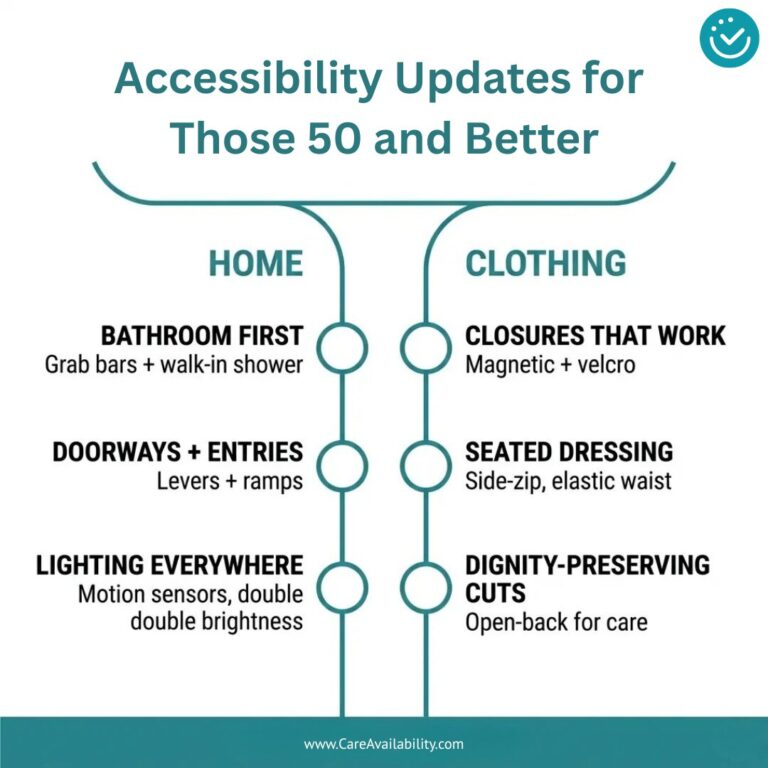
Making Home and Getting Dressed Easier
A Practical Guide to Accessibility Updates for Those 50 and Better A case manager once told a colleague of ours…
Read article
Staying Independent at Home
Best Practices for Seniors and Knowing When It’s Time to Transition Aging doesn’t have to mean giving up the comforts…
Read article
Coming Home After a Hospitalization
What to Expect When Coming Home After a Hospitalization Our team is often called to assist older adults transitioning home…
Read articleExplore
Other Senior Living & Care Types
Assisted Living
Residential communities offering help with daily activities, meals, and medication management.
Learn moreMemory Care
Specialized care for individuals living with Alzheimer's or other forms of dementia.
Learn moreAdult Care Homes
Smaller residential homes providing personalized care in a home-like setting.
Learn moreIndependent Living
Active retirement communities for seniors who want maintenance-free living.
Learn moreSkilled Nursing
Facilities providing 24-hour nursing care for complex medical needs.
Learn moreHome Care
Non-medical assistance with daily living activities delivered in your home.
Learn moreHospice Care
Comfort-focused care for individuals with terminal illness and their families.
Learn moreNeed Help Finding Home Health?
Choose your state above to see home health providers near you. Contact them directly, no middleman, no referral fees.