Home Care
Home Care in Montana
Browse 2 providers across 5 cities in Montana. Page updated · Provider listings and openings update live.
Search Providers in MontanaExplore by City
Cities in Montana
No cities match your search.
Learn More
Understanding Home Care in Montana
Home Care in Montana
Home care in Montana provides non-medical personal care and daily living assistance to older adults who want to remain safely at home, with agencies serving Billings, Missoula, Great Falls, Bozeman, Helena, and surrounding communities. Agencies providing personal care services in Montana are licensed by the Montana Department of Public Health and Human Services under the Personal Care Provider License designation.
Families typically begin considering home care when a loved one needs help with bathing, dressing, grooming, meals, or housekeeping but does not require medical services, or when family caregivers need supplemental or respite support to sustain a manageable routine. This page covers how home care is defined in Montana, how it differs from home health care, what it typically costs, how families pay including Medicaid waiver options, and answers to frequently asked questions. Home care costs in Montana are near the national average, the state has no income tax, and the Big Sky Waiver may cover personal care services for eligible seniors.
Home Care Licensing and Regulations for Montana
- Licensing Agency
- Montana Department of Health
- License Type
- Personal Care Provider License
- Regulatory Code
- ARM 37.106
- Agency Contact
- Call state health department
- Website
- Contact state for details
- License Renewal
- Varies by state
State Definition
Montana licenses personal care providers offering ADL assistance, meal preparation, medication reminders, and light housekeeping.
Home Care Resources & Links for Montana
Montana Department of Public Health and Human Services, Senior and Long-Term Care connects seniors and families with local Home Care resources and Area Agencies on Aging. Contact state for phone number.
Montana Healthcare Programs administers programs that may cover personal care services through approved Home Care agencies for eligible seniors. Contact state for details.
Eldercare Locator connects families with local Home Care resources, Area Agencies on Aging, and guidance on choosing Home Care agencies and caregivers. A public service of the Administration on Aging. Phone: 1-800-677-1116
Family Caregiver Alliance provides resources for family members considering hiring Home Care support and guidance on when to seek professional caregiving assistance. Phone: 1-800-445-8106
National Association for Home Care & Hospice offers information about Home Care services and helps families understand the difference between Home Care and home health.
The Home Care Landscape in Montana
Montana's Home Care agencies serve seniors who prefer to age in place with support rather than relocating to residential care. Major medical centers including Billings Clinic, Providence St. Patrick provide specialized care when needed. The state has a varied continental climate, which appeals to many retirees.
Montana does not tax Social Security, which affects overall affordability for those living on fixed incomes. Montana Medicaid operates the Big Sky Waiver program, which may cover personal care services through approved Home Care agencies for eligible seniors who meet both financial and functional criteria. Home Care costs in Montana reflect the local cost of labor, agency overhead, and the level of care required. Many families start with a few hours per week and increase services as needs change, allowing seniors to maintain familiar surroundings and independence.
What Is Home Care?
Home care represents a practical approach to senior care that allows older adults to receive personalized assistance while remaining in their own homes. Unlike medical care provided in clinical settings, Home Care focuses on non-medical support with daily activities such as bathing, dressing, meal preparation, and light housekeeping. Trained caregivers work directly in clients' homes to provide companionship and help with activities of daily living, including medication reminders and personal hygiene support. This type of in-home care has become increasingly popular across the country as seniors seek to maintain independence and comfort in familiar surroundings.
The flexibility of home care makes it an attractive option for many families navigating senior care decisions. Services can be arranged for just a few hours per week to provide basic assistance, or extended to around-the-clock care for those with greater needs. Care plans are customized to each individual's specific situation, whether someone requires help with mobility, meal preparation, or simply needs companionship and social connection. For families managing work obligations or caregiver fatigue, home care offers peace of mind by ensuring their loved ones receive consistent, compassionate support while maintaining the dignity and routine of their own homes.
What to Expect with Home Care
The process of hiring a Home Care agency typically begins with a comprehensive in-home assessment where a care manager evaluates your loved one's medical history, daily routines, home environment, and personal preferences. This initial consultation is critical because it informs the development of a customized care plan tailored to the individual's specific needs and goals. Once the assessment is complete, the agency matches a compatible caregiver or care team to your family, and a designated care manager remains your primary contact throughout the service relationship. This care manager monitors progress, adjusts the care plan as circumstances change, and ensures continuity of quality senior care.
Home care services are highly flexible and can range from a few hours per week to 24-hour live-in care, depending on what your situation requires.
Common services include:
- personal assistance with bathing, dressing, and grooming
- medication reminders
- meal preparation and grocery shopping
- light housekeeping and laundry
- transportation to medical appointments
- meaningful social companionship
It's important to note that home care aides typically provide non-medical support, though some states allow certain trained caregivers to assist with specific health-related tasks under supervision. The exact scope of services available varies by state and agency, so discussing your specific needs with a Home Care provider will help determine what level and type of care best suits your family's situation.
Benefits of Home Care
- Age in place: remain in the comfort and familiarity of your own home.
- Personalized one-on-one care: the caregiver's full attention is on one person, unlike in a facility.
- Flexible scheduling: arrange care for a few hours a day, overnight, or 24/7.
- Family caregiver relief: home care provides respite for family members who are primary caregivers.
- Familiar environment: staying home can reduce confusion and anxiety, especially for those with mild dementia.
- Cost-effective: for those who only need part-time assistance, compared to the monthly cost of a residential facility.
How to Pay for Home Care
Home care costs vary by location and hours needed, typically charged on an hourly basis. Common payment options include:
Private pay - YES
personal funds, retirement income, or family contributions.
Long-term care insurance - MAYBE
most policies cover home care services.
Medicaid - MAYBE
many states offer home and community-based waiver programs that cover home care for qualifying individuals.
Medicare - NO
Medicare generally does not cover non-medical home care. It does cover home health (medical) services under separate criteria.
Veterans benefits - MAYBE
the VA offers home care benefits for eligible veterans, including the Aid & Attendance program.
State and local programs - MAYBE
Area Agencies on Aging and other local programs may offer subsidized home care.
Choosing a Home Care Provider
When selecting a Home Care provider, consider these factors:
- Agency vs. independent caregiver — agencies handle hiring, training, and backup coverage; independent caregivers may cost less but come with more management responsibilities.
- Licensing and bonding — verify the agency is licensed (where required by state) and carries liability insurance.
- Caregiver screening — ask about background checks, training requirements, and ongoing supervision.
- Flexibility — confirm the agency can adjust hours and services as needs change.
- Backup coverage — what happens when a caregiver is sick? Quality agencies have backup plans.
- References — ask for client references and check online reviews.
Other inquiries/questions to ask:
Agency Information
- Is the agency RN operated?
- Is the agency a franchise or locally owned and operated?
- Is the agency licensed by WA State Department of Health?
- Is the agency licensed for both home care and home health?
- Does the agency have liability insurance?
- Can the agency respond to you 24/7?
Caregiver Information
- Are employees licensed, bonded & insured? Or are they independent contractors?
- Does the agency test skills, conduct behavioral interviews and verify caregiver credentials?
- Are caregivers required to have current certifications for First Aid, CPR, and TB?
- Are caregivers provided continuing education/training?
- Can authorized individuals monitor care and make requests online in real time?
- Does the agency offer caregiver replacement when the “fit” may not be right?
Documentation and Supervision
- Does an RN/MSW/Care Manager conduct a free home care assessment?
- Does an RN/MSW/Care Manager create a home care plan?
- Does an RN/MSW/Care Manager supervise the caregivers?
- Do caregivers receive client orientation before arriving at a client’s home?
Policies and Cost
- Can services be cancelled with a 4-hour notification?
- Does the agency offer flexible scheduling, custom care plans, and a continuum of care?
- Does the agency have weekly or monthly minimums?
- What is the hourly minimum per shift?
- Does the agency offer home care discounts?
- What is the required deposit?
- Will the agency accept long-term care insurance?
Frequently Asked Questions
Common Questions About Home Care in Montana
What signs indicate it may be time to consider home care?
There is no single trigger, but several patterns together often signal that it is time to have a conversation about home care:
- Declining personal hygiene -- not bathing regularly, wearing the same clothes for days, skipping grooming routines that were previously routine
- Unintended weight loss or visible signs of poor nutrition
- A cluttered or unusually dirty home in someone who was previously tidy
- Missed medications or evidence of incorrect dosing
- Increased confusion, disorientation, or memory gaps that affect daily function
- Falls, near-falls, or difficulty with mobility that previously was manageable
- Social withdrawal or signs of depression and loneliness
- A family caregiver who is visibly exhausted or overwhelmed
- The earlier a family starts the conversation -- ideally before a crisis -- the more choice and flexibility they have in setting up the right level of support.
What is the difference between Home Care and Home Health?
Home care and home health are two distinct services that are frequently confused. Home care is non-medical support with daily activities -- bathing, dressing, meals, companionship, and light housekeeping -- provided by a trained home care aide. It does not require a doctor's order and is typically not covered by Medicare.
Home health is medical care delivered at home by licensed professionals, including registered nurses, physical therapists, occupational therapists, and speech therapists. Home health requires a physician's order, is delivered by a Medicare-certified agency, and covers skilled services following a hospitalization, surgery, or illness. Home health coverage under Medicare ends when the skilled need resolves.
Many families need both at different points. A parent recovering from hip replacement surgery may receive Medicare-covered home health physical therapy for six weeks, then continue with private-pay home care to maintain daily function afterward.
(Source: Medicare.gov; National Association for Home Care and Hospice)
What is the difference between a home care agency and an independent caregiver?
A home care agency employs caregivers directly, handles background checks, training, scheduling, and backup coverage, and carries liability and workers' compensation insurance. When your regular caregiver is sick, the agency sends a replacement. When a caregiver does not work out, the agency makes the change. Families pay a higher hourly rate, but the agency absorbs the management and legal responsibilities of employment.
An independent caregiver is hired directly by the family. This often results in a lower hourly cost, but the family becomes the legal employer -- responsible for payroll taxes, workers' compensation, background verification, and coverage when the caregiver is unavailable.
For families managing care from a distance, or for anyone who does not want to take on the legal and logistical responsibilities of being an employer, a licensed agency is typically the more practical choice.
How is home care regulated?
Home care licensing and regulatory oversight vary by state. Some states have rigorous licensing requirements, require agencies to meet staffing ratios, and conduct regular inspections. Other states have minimal home care oversight. This inconsistency is one reason why asking direct questions about agency practices matters -- state licensing alone does not guarantee quality.
Voluntary accreditation through organizations like The Joint Commission or the Community Health Accreditation Partner (CHAP) signals that an agency has met independent quality standards beyond what state licensing requires. Medicare-certified home health agencies (as distinct from home care agencies) are regulated by the Centers for Medicare and Medicaid Services and subject to federal quality standards and surveys.
Is home care available 24 hours a day?
Yes. Home care is available on an hourly, full-time, or live-in basis depending on what the individual needs and what the agency offers.
Around-the-clock coverage typically takes one of two forms. Live-in care places a single caregiver in the home who is available throughout the day and evening, with a designated rest period. Shift-based 24-hour care uses rotating caregivers in 8 or 12-hour shifts to provide continuous coverage. Shift-based care tends to cost more than live-in arrangements but ensures the caregiver is never on a rest period.
Not every agency offers 24-hour or live-in care. Confirming availability, staffing capacity, and current pricing for extended care arrangements should be part of the initial agency conversation.
What is respite care, and how does it work with home care?
Respite care is temporary, substitute caregiving that gives primary family caregivers a break. It can take several forms: a home care aide comes in for a few hours so a family caregiver can work, rest, or handle personal obligations; care is provided overnight so the family caregiver can sleep; or a longer-term arrangement provides coverage while the primary caregiver travels.
Approximately 53 million Americans provide unpaid care to an adult family member, and caregiver burnout is a documented health risk -- not just an inconvenience. Respite care is one of the most direct interventions for preventing burnout. Many home care agencies specialize in respite arrangements and can set up flexible schedules based on the primary caregiver's needs.
(Source: AARP and National Alliance for Caregiving, Caregiving in the U.S. 2020)
Can a home care aide give medications?
In most states, non-medical home care aides can provide medication reminders -- letting someone know it is time to take a scheduled medication -- but they cannot administer medications, handle controlled substances, or make clinical decisions about dosing.
Some states have expanded what trained aides can do, including assistance with self-administered medications under defined conditions. The rules vary by state, agency, and the specific training and certification level of the caregiver.
If medication management is a significant concern -- complex multi-drug regimens, dementia-related compliance issues, injectable medications -- a home health agency that employs licensed nurses may be more appropriate than a standard home care provider.
Can home care help with Alzheimer's and dementia?
Yes. Many home care agencies employ or can specifically place caregivers with specialized training in dementia care. This training typically covers communication strategies, redirection techniques, managing behavioral symptoms, and maintaining routines that support cognitive function and reduce agitation.
Home care for someone with dementia requires particular care in caregiver selection and consistency. Frequent caregiver changes are disruptive for individuals with memory impairment. When evaluating agencies, ask specifically about caregiver continuity and dementia-specific training.
At later stages of dementia, the level of supervision and support required may exceed what home care alone can provide, and a transition to memory care may become appropriate. Home care and memory care serve different points on the same continuum.
(Source: Alzheimer's Association, Dementia Care at Home, 2023)
What is the difference between home care and assisted living?
Home care allows a person to remain in their own home while receiving support with daily activities. Assisted living is a residential care setting where an individual moves into a community that provides housing, meals, personal care, and social programming.
Home care works best when the person can still live safely at home with appropriate support, values the independence and familiarity of their own environment, and has a manageable level of need. Assisted living is often a better fit when daily care needs are extensive, safety at home is a growing concern, social isolation is significant, or the person would benefit from the structure and community that a residential setting provides.
Many families use home care as a bridge -- starting with a few hours of help and increasing as needs change -- before eventually transitioning to assisted living or another residential option. These are not competing choices so much as sequential stages on the same care continuum.
(Source: National Center for Assisted Living; Genworth Cost of Care Survey, 2023)
Does the VA cover home care for veterans?
The VA offers several programs that may cover or subsidize home care for qualifying veterans and surviving spouses. The Aid and Attendance (A&A) pension benefit provides additional income for veterans who need help with daily activities, which can be used to pay for home care. The Home-Based Primary Care program brings VA health teams directly to veterans with complex medical needs who have difficulty leaving home. Additional support may be available through the Caregiver Support Program.
Eligibility is based on military service history, disability rating, and financial need. Not all veterans qualify for all programs. The VA Caregiver Support Line (1-855-260-3274) is a starting point for families who want to understand what benefits may be available.
(Source: U.S. Department of Veterans Affairs, Caregiver Support Program, 2024)
What should I expect to pay as a deposit to a home care agency?
Practices vary by agency. Some require no deposit. Others may request a deposit equivalent to one to two weeks of projected service, applied toward the first invoice. Families should ask about deposit requirements upfront and confirm whether it is refundable, under what circumstances, and how it is handled if services are discontinued.
Get all financial terms in writing before services begin. A well-run agency will have a clear service agreement that outlines rates, billing cycles, deposit requirements, and cancellation terms.
How much does home care cost per month?
The national median monthly cost of home care is approximately $5,720, based on a 44-hour month, according to the Genworth Cost of Care Survey (2023). At an hourly rate, the national median is about $29 per hour for a home care aide.
Costs vary significantly by location. States with higher costs of living -- California, New York, Massachusetts, Alaska -- often run 30 to 60 percent above the national median. Rural areas in the South and Midwest often run below it.
The actual monthly cost for any individual depends on how many hours of care are needed and the specific services required. Families should request current hourly rates from local agencies when comparing options, as rates shift over time.
Does Medicare cover home care?
Medicare does not cover non-medical home care -- the assistance with bathing, dressing, meals, and companionship that most families are looking for when they begin this search.
What Medicare does cover is home health, which is skilled nursing, physical therapy, occupational therapy, and speech therapy delivered at home -- but only when all of the following conditions apply: the patient is homebound, a doctor orders and certifies the need, the care is provided by a Medicare-certified agency, and the services are considered medically necessary.
For ongoing personal care and companionship support, families typically pay privately, use long-term care insurance, or explore Medicaid waiver programs if eligible.
(Source: Medicare.gov, Home Health Services, 2024)
How do I find Home Care near me?
Use the search tool on CareAvailability to find home care providers in your area. When evaluating agencies, ask about caregiver screening, training, backup coverage, and whether they can scale services up or down as your needs change.
What is Home Care?
Home care is non-medical assistance provided in your home by trained caregivers. Services include help with bathing, dressing, meal preparation, housekeeping, medication reminders, and companionship. It allows seniors to age in place safely.
Home Health Aide Costs in Montana
Average monthly costs compared to the national median and neighboring states.
Neighboring States Comparison
| State | Monthly Cost | vs. Montana |
|---|---|---|
| Montana | $7,128 | — |
| Idaho | $6,769 | -5% |
| North Dakota | $7,128 | 0% |
| South Dakota | $6,483 | -9% |
| Wyoming | $7,128 | 0% |
Cost data from the Genworth/CareScout 2024 Cost of Care Survey, the newest with state-level data. Costs may vary by facility and care needs.
Related Articles
Guides & Resources for Home Care in Montana

The Difference Between Medicare and Medicaid
Medicare vs. Medicaid: What’s the difference? The simple answer: Medicare and Medicaid are two different healthcare programs with different functions…
Read article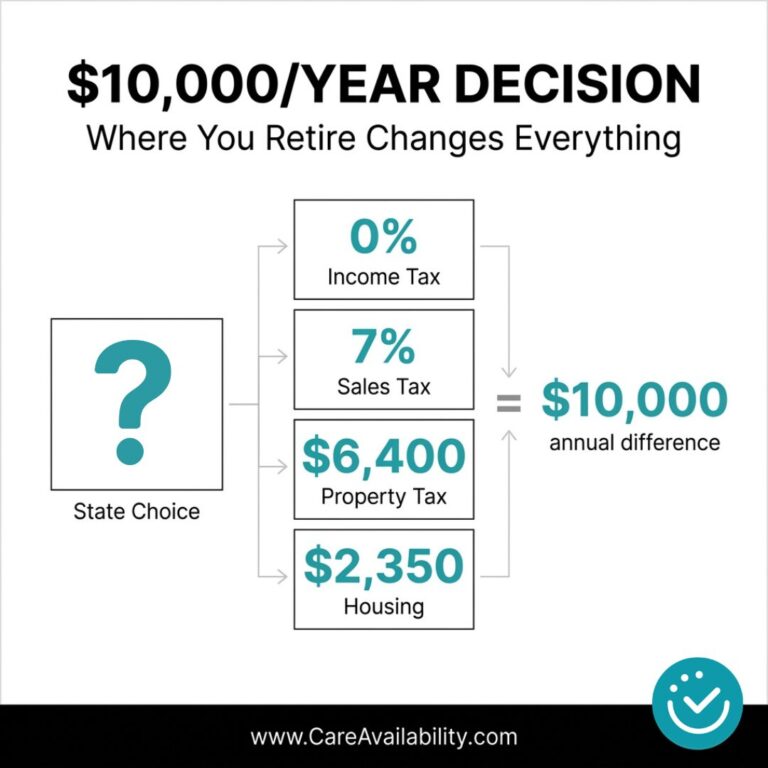
Where You Retire Can Mean Tens of Thousands of Dollars Over a Decade: A Practical Guide to State-by-State Differences
The Question Most Retirement Plans Skip Most retirement planning conversations focus on when to retire. How much to save. When…
Read articleCitations & Sources
- Montana Department of Health. Home Care Regulations. 2025.
- Montana Medicaid. Personal Care Services Programs. 2025.
Explore
Other Senior Care in Montana
Browse other types of senior care available in Montana.
Adult Care Homes
Smaller residential homes providing personalized care in a home-like setting.
View in MontanaAssisted Living
Residential communities offering help with daily activities, meals, and medication management.
View in MontanaHome Health
Licensed medical care provided by nurses and therapists in your home.
View in MontanaHospice Care
Comfort-focused care for individuals with terminal illness and their families.
View in MontanaIndependent Living
Active retirement communities for seniors who want maintenance-free living.
View in MontanaMemory Care
Specialized care for individuals living with Alzheimer's or other forms of dementia.
View in MontanaSkilled Nursing
Facilities providing 24-hour nursing care for complex medical needs.
View in MontanaNeed Help Finding Home Care in Montana?
Use our search tool to find home care providers in Montana. Contact them directly. No middleman, no referral fees.