
The Caregiver No One Trained For
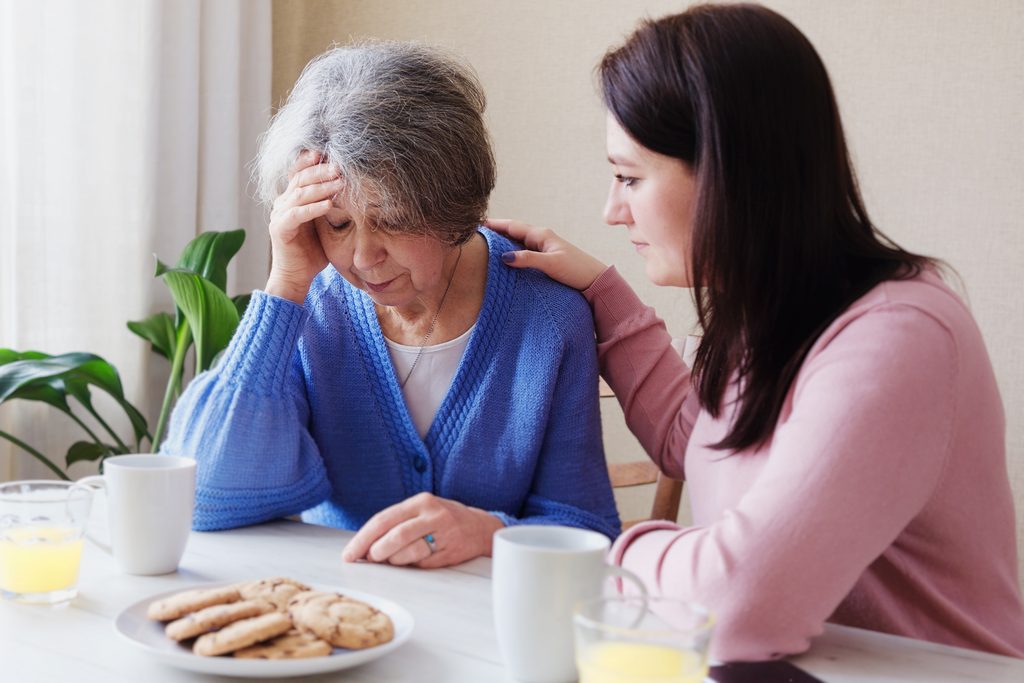
When people picture geriatric caregiving, they picture a familiar set of challenges: a walker by the front door, a seven-day pill organizer on the kitchen counter, a home health aide’s card on the refrigerator, a difficult conversation about the car keys. Severe mental illness rarely appears in that picture. And yet, across Washington State, a substantial and largely uncounted population of families is managing exactly this – caring for a mother, father, aunt, uncle, or older sibling who is growing old with schizophrenia, bipolar I disorder, schizoaffective disorder, or major depression with psychotic features, or who developed a serious mental illness for the first time well into their sixties, seventies, or eighties.
These caregivers live at the intersection of two systems that were not built to talk to each other. The aging services network – senior centers, adult day programs, home care agencies, assisted living communities, Area Agencies on Aging – was built primarily around dementia, frailty, falls, and chronic physical illness. The behavioral health system was built primarily around crisis response for younger and middle-aged adults. A geriatric caregiver managing a parent’s psychosis or a decades-long psychiatric illness that has followed that parent into old age is often the first person to discover that neither system quite has a lane built for their situation.
That gap is not just an inconvenience. It shows up as an assisted living community that will accept a resident with moderate dementia but not one with active psychotic symptoms; a psychiatric crisis team that is not trained to distinguish delirium from a schizophrenic relapse in an eighty-year-old; a family that cannot find a single case manager who understands both Medicaid’s long-term-care rules and Washington’s Involuntary Treatment Act. It shows up as lonelines- a caregiver support group built around dementia that doesn’t quite fit, and a serious-mental-illness support group built around parents of young adults that doesn’t quite fit either.
This section cannot rebuild those systems. What it can do is give you, and the professionals who support you, a working knowledge of what severe mental illness looks like in an aging body and mind, how it differs from dementia, how Washington’s crisis and legal systems actually function, and where to find support before a crisis – not just during one. It draws directly on the Washington SMI Navigation Guide published by the National Shattering Silence Coalition (NSSC), reorganized here around the specific realities of caregiving for an older adult, and shaped in collaboration with Leanna May Franklin, MA, CIHC, NSSC’s Washington State Policy Director, who came to this work after her own son experienced a psychotic break in late adolescence.
The scale of caregiving in America helps explain why this chapter belongs in a book about geriatric care rather than a specialty mental health text. According to AARP’s 2025 Caregiving in the U.S. report, 63 million Americans – roughly one in every four adults – currently serve as a family caregiver, a figure that has grown nearly 50 percent since 2015. Twenty-nine percent are “sandwich generation” caregivers, simultaneously raising or supporting children while also caring for an aging relative. Sustained caregiving of this kind carries a measurable cost: one in five caregivers describes their own health as poor, half report a negative financial impact, and a quarter have taken on debt because of their caregiving responsibilities.
No national survey yet isolates caregivers of an older adult with serious mental illness as their own category – which is itself part of the problem this section is trying to address. But there is no reason to expect this population fares better than family caregivers overall. If anything, the added weight of diagnostic confusion, legal complexity, and enduring stigma around mental illness suggests it fares worse, and that these caregivers are less likely to be identified, screened, or offered support by the professionals who cross their path.
A Composite Portrait
The families below are composites, drawn from patterns common across many real caregiving stories rather than any single individual – the specifics are illustrative, not a case history.
Marion, 68, has managed her sister’s schizophrenia for over thirty years. As Marion’s own knees give out and her sister approaches seventy, the case manager who once coordinated their care has retired, and Marion cannot find a new one who will take on an aging client with a decades-long psychiatric history.
Robert, 61, first noticed his mother’s paranoia at seventy-four, alongside her forgetfulness. Two years and three misdiagnoses later, a geriatric psychiatrist finally identified late-onset psychosis rather than dementia – time Robert now describes as the hardest of his life, spent guessing at a system with no clear front door.
Neither family found a support group, a housing placement, or a single professional who was fluent in both worlds at once. This section exists because their experience is common, not rare.
Understanding Severe Mental Illness in Later Life
“Severe mental illness” (SMI) is not a single diagnosis. It is a general term for conditions – principally schizophrenia, schizoaffective disorder, bipolar I disorder, and major depressive disorder with psychotic features – that strongly affect how a person thinks, feels, and manages daily life, including periods of psychosis, mania, or severe depression. These are neurobiological, no-fault brain illnesses, not character flaws, and not the natural consequence of aging. Understanding a few basic distinctions will change how you interpret what you are seeing, and how effectively you can advocate for the person in your care.
Two Different Roads Into Late-Life Illness
Older adults living with SMI generally arrive there by one of two paths, and it matters which one applies to your family member. The first, and more common, path is aging with a lifelong illness: roughly three-quarters of older adults with schizophrenia developed the illness in adolescence or early adulthood and have carried it, with its familiar rhythms of relapse and stability, into old age. If this describes your parent, you likely already know their baseline, their early warning signs, and what has helped in the past – that history is one of your most valuable tools, and it is worth writing down in detail before it is needed (see the Family Crisis Packet).
The second path is late-onset illness – psychosis, mania, or severe depression that first appears in middle age or later, with no prior psychiatric history. This is less common but far from rare: an estimated one in four cases of schizophrenia in older adults is late-onset, and clinicians expect the raw number of late-life psychotic illnesses to rise simply because the population is aging. Late-onset schizophrenia tends to look somewhat different from the early-onset form – milder negative symptoms such as social withdrawal and flattened emotion, less disruption to memory and thinking, and a disproportionate effect on women, possibly related to the loss of estrogen’s protective effect after menopause. It typically responds to lower medication doses than younger patients need. If your parent’s first psychiatric symptoms are appearing now, in their sixties, seventies, or eighties, resist the assumption that this must be dementia – and read the next section closely.
Distinguishing SMI From Dementia – Why It Matters
Because psychosis, paranoia, and dramatic behavioral change can appear in both severe mental illness and dementia, families and even some clinicians can mistake one for the other – with real consequences for treatment. Roughly half of people with Alzheimer’s disease develop delusions or hallucinations within three years of diagnosis, but these tend to be simple, concrete beliefs (a conviction that a caregiver is stealing, or that a spouse is unfaithful) and are more often visual than auditory. Psychosis tied to a primary psychiatric illness such as schizophrenia more often involves complex, elaborate delusions and prominent auditory hallucinations – hearing voices – and it may fluctuate with a much longer history of episodes.
A sudden, sharp change in an older adult’s mental state – new confusion, agitation, or hallucinations appearing over hours or days rather than months – should always raise the question of delirium first: a urinary tract infection, dehydration, thyroid imbalance, medication interaction, or another acute medical problem can produce a picture that looks exactly like a psychiatric crisis but is a medical emergency with its own treatment. This is the geriatric-specific version of a pattern called diagnostic overshadowing, and it runs in both directions: a real infection can be mistaken for a psychiatric relapse, and a genuine psychiatric relapse can be mistaken for “just getting old” or dismissed as dementia. Push for a full medical work-up before anyone – including you – settles on an explanation.
At a Glance: Distinguishing Features
- Typical onset pattern – Primary SMI (e.g., schizophrenia): lifelong illness aging into later life, or new late-onset symptoms. Dementia-related psychosis: emerges alongside progressive memory and cognitive decline.
- Hallucination type – Primary SMI: often auditory (hearing voices). Dementia-related psychosis: often visual (seeing people or animals).
- Delusion content – Primary SMI: complex, elaborate beliefs. Dementia-related psychosis: simple, concrete beliefs (theft, infidelity).
- Course – Primary SMI: episodic, relapse and stability over years. Dementia-related psychosis: generally progressive, tracking cognitive decline.
- First step when new/sudden – Primary SMI: rule out delirium and medical causes before assuming relapse. Dementia-related psychosis: rule out delirium and medical causes before assuming disease progression.
Overlap is common, not exceptional – a parent can be living with both a lifelong psychiatric illness and an emerging dementia at the same time, which is precisely why a single medical explanation should never be assumed without a clinician who is willing to look carefully at both possibilities.
Anosognosia in an Aging Parent
Anosognosia – when a person genuinely does not recognize that they are ill, because the illness itself affects the part of the brain responsible for that awareness – is one of the most disorienting aspects of caring for someone with SMI at any age, and it often intensifies caregiving conflict in later life because it can look identical to ordinary stubbornness, or to a parent’s long-standing resistance to “being told what to do” by an adult child. It is not denial, and it is not a choice. A parent who refuses medication, refuses to see a doctor, or insists nothing is wrong is not being difficult – the illness itself has taken away their ability to recognize it. Families generally do better focusing on safety and connection rather than trying to argue someone into agreement (see the LEAP method).